Development video
Overview
Girl Scouts of the USA had a problem that no badge could fix. Membership had been declining for over a decade. Girls, particularly older ones, were disengaging. And GSUSA had no secure, COPPA-compliant way for girls to interact with program content between troop meetings, in a world where their peers were using mobile devices regularly.
The organization needed a digital presence that felt relevant to a generation raised on Minecraft and
Bitmoji, without compromising the safety, trust, and values that families expected from Girl Scouts.
The app introduced a blended physical–digital model, extending badge work, troop engagement, and identity-building into a safe, structured mobile experience. It was not designed to replace the troop experience. It was designed to make girls want to engage with the Girl Scout program digitally.
Design Leader
I led UX strategy and research direction for the Girl Scout App across a 2.5 year development cycle, managing two sets of vendor UX designers and maintaining continuity of product vision through vendor turnover, shifting roadmaps, and organizational resistance.
My contributions included defining research strategy and translating findings into product direction, advocating for inclusive and psychologically informed designs based on both research and lived experience, and ensuring every decision remained girl-led, COPPA-compliant, and aligned to GSUSA's digital transformation goals.
The Challenge
As membership declined, girls who did not feel connected to badge topics or troop activities, had limited ways to pursue interests independently. Volunteers were overwhelmed coordinating programming manually. And GSUSA had no secure, COPPA-compliant way for girls to digitally engage with program content between troop meetings.
The challenge was not simply to build an app. It was to design a safe, scalable digital extension of the Girl Scout program for:
Vulnerable users (children ages 7–14)
Multi-persona access (adult and child onboarding)
Strict COPPA privacy requirements
No single sign-on across systems
High expectations around safety and representation
The experience needed to feel motivating and modern without increasing risk.
The Strategy: Designing Engagement Without Exposure
To address declining engagement while preserving trust and regulatory compliance, we designed the app as a structured digital extension of the Girl Scout Leadership Experience, not a social platform.
The strategy centered on three principles:
Bridge Troop Time and Individual Exploration: We created a blended physical–digital model that extended badge work beyond meetings while preserving troop structure. Girls could explore badges independently, bookmark interests, and track progress, while still aligning with troop-led experiences.
Enable Community Without Risk: Under COPPA constraints, traditional social mechanics were not viable. Instead, we designed moderated, troop-level communication with no 1:1 messaging, profanity filtering, and parent visibility. This preserved belonging and collaboration without introducing exposure.
Use Identity and Achievement as Engagement Drivers: We leveraged the GIRLmoji avatar and the digital sash as motivational anchors. Avatar customization, badge visualization, and unlockable rewards created intrinsic engagement while reinforcing program identity.
Operationally, we:
Sequenced rollout through usability testing and phased validation
Integrated with fragmented CRM systems despite infrastructure limitations
Used surveys and behavioral analytics to measure engagement in the absence of fully mature reporting systems
Research and Development
Across two and a half years of research, usability testing, vendor transitions, and system constraints, the experience was built and rebuilt around four core surfaces: Onboarding, Home, Today, and Explore. Each was designed to extend the Girl Scout Leadership Experience into a safe, structured digital layer. Each went through multiple iterations before it was right.
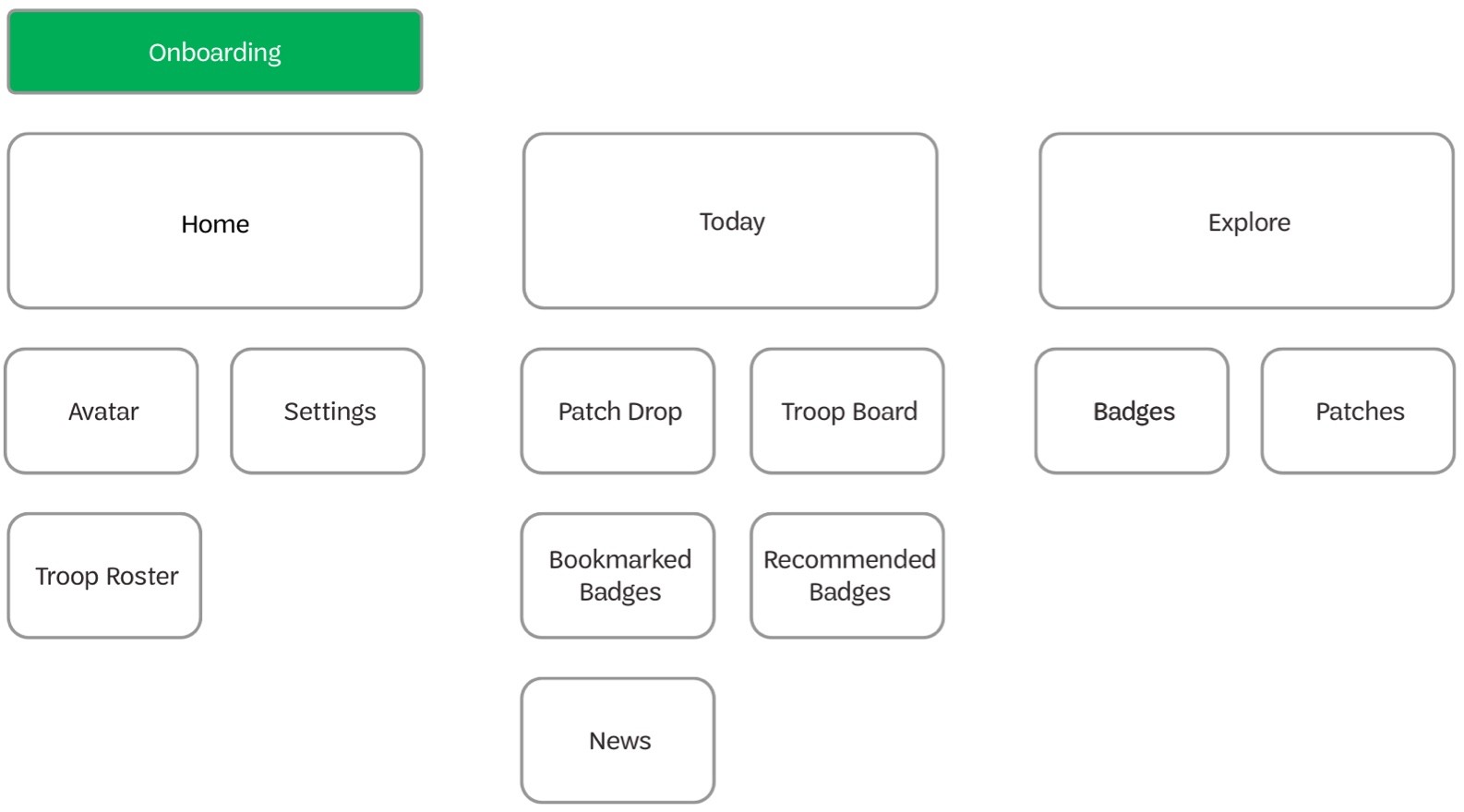
The GS App structure
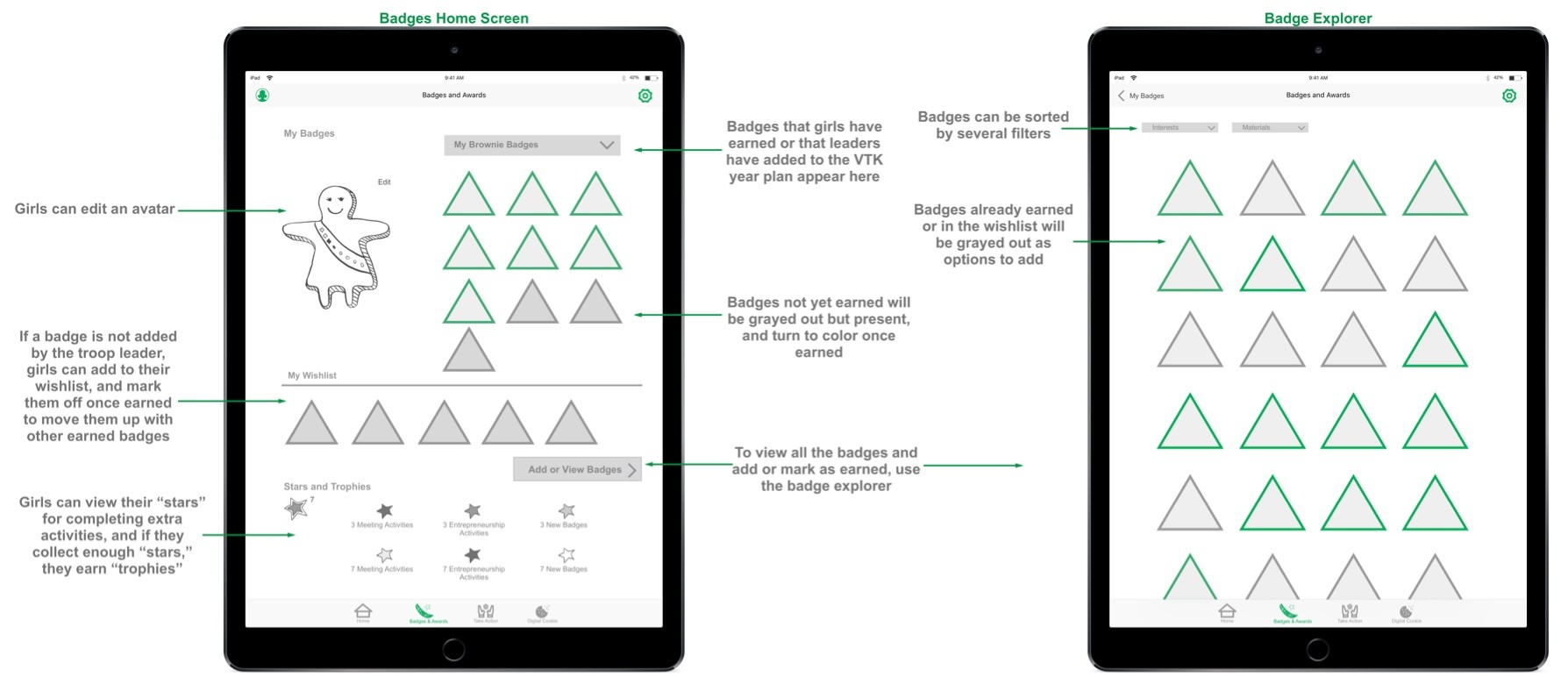
Early concept wireframes
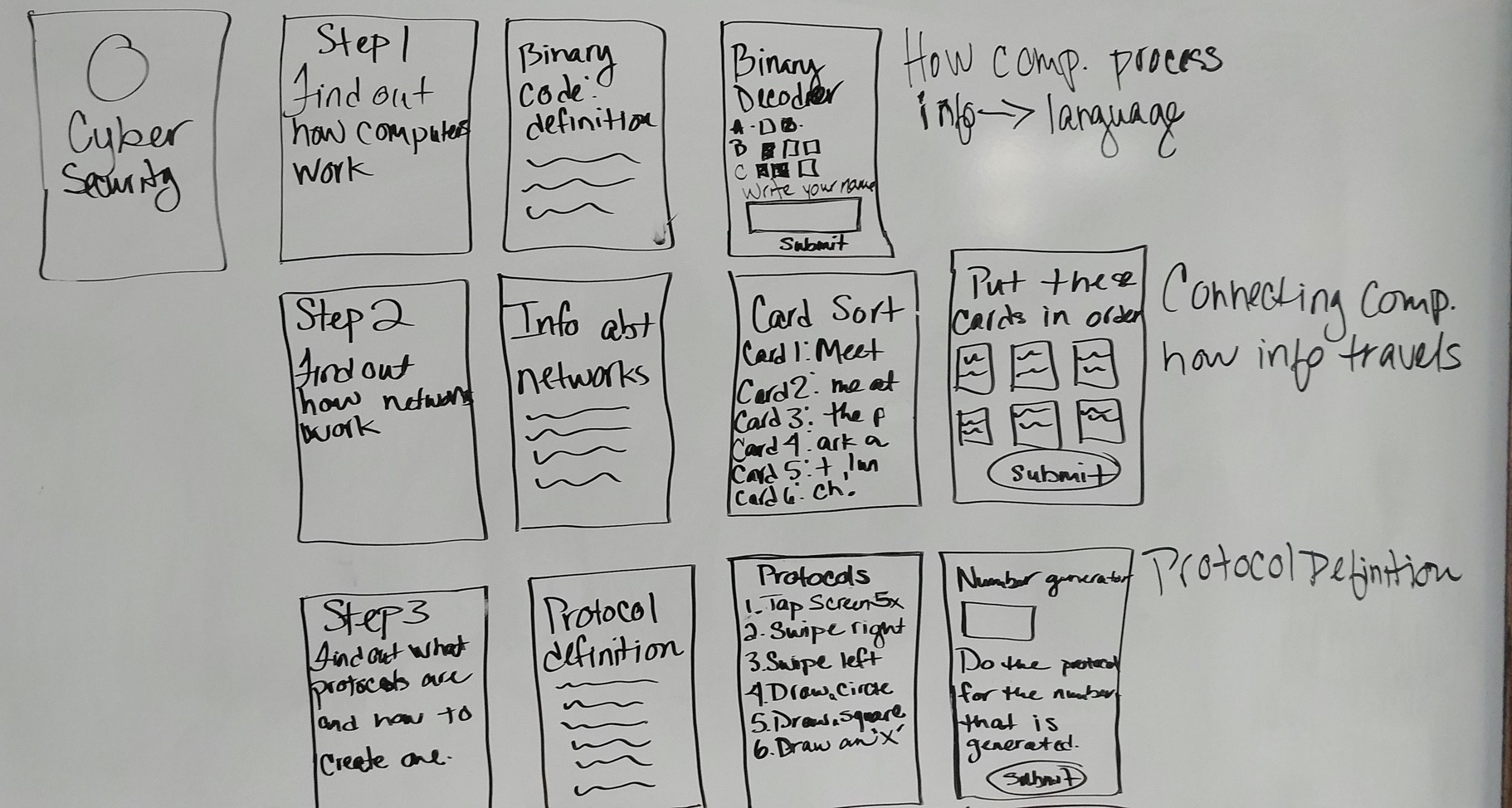
Digital badge flow sketches
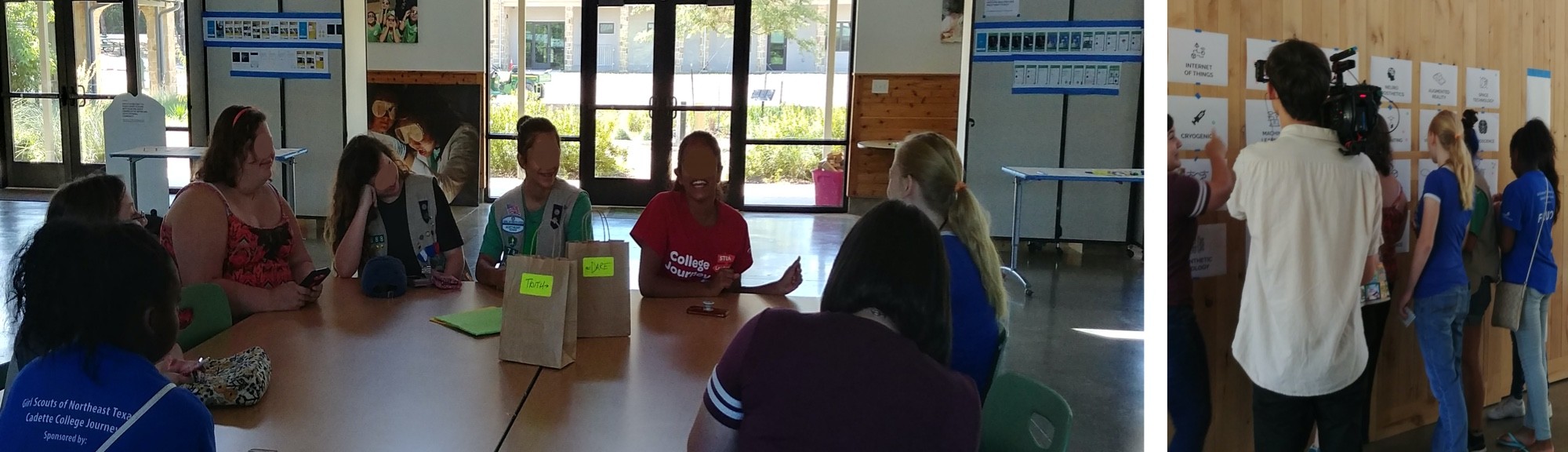
Prototype testing in Dallas, TX
Onboarding: Identity, Belonging & Safety by Design
Because Girl Scouts operates under COPPA and strict membership validation requirements, onboarding required extensive backend orchestration. We mapped complex household structures (multiple girls, divorced parents, multi-troop leaders) and integrated Gigya and Salesforce systems through browser-based API calls and triggered email flows for legal agreements and validation.
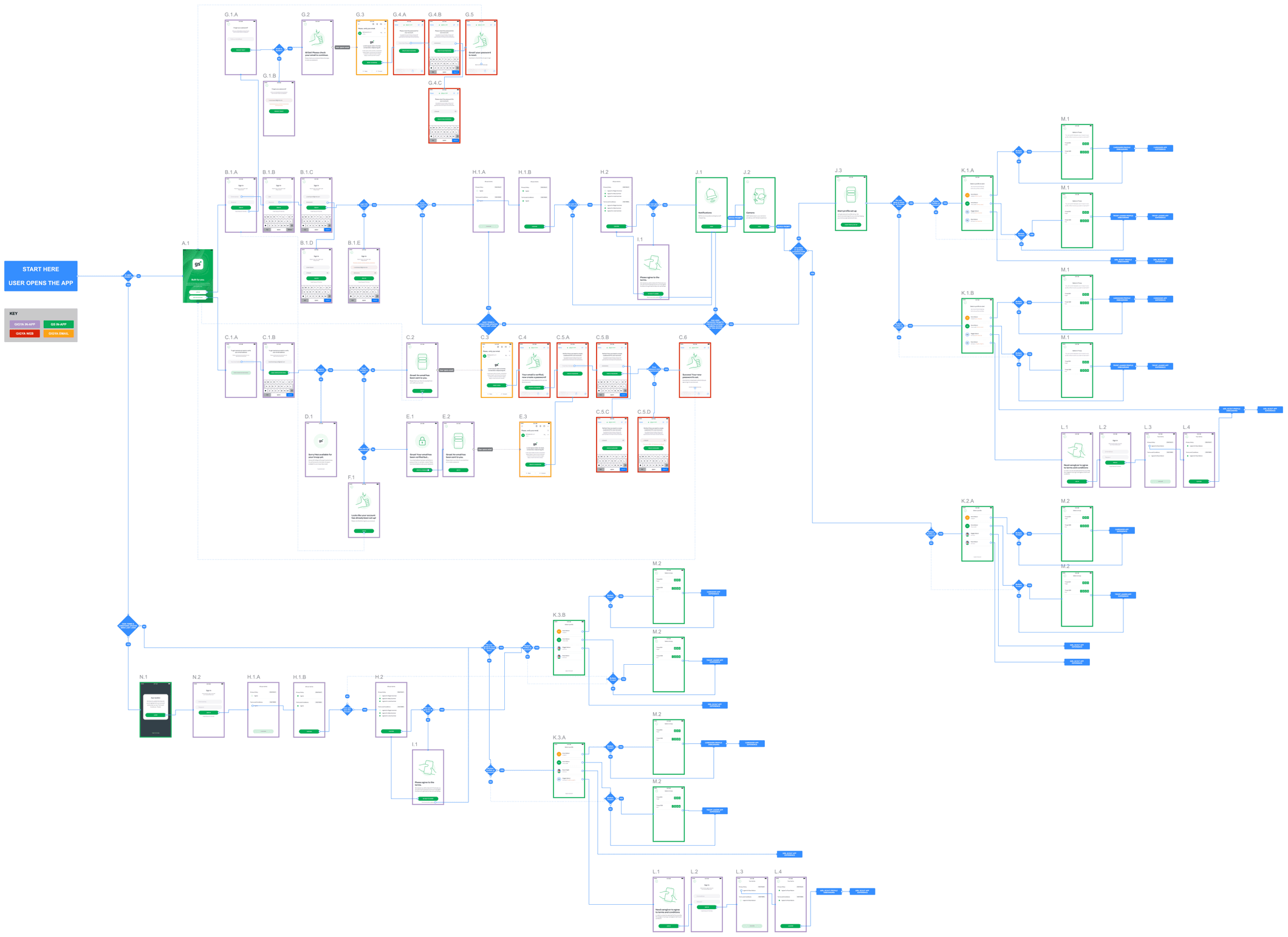
App backend architecture
Once adults completed onboarding, girls entered their own experience.
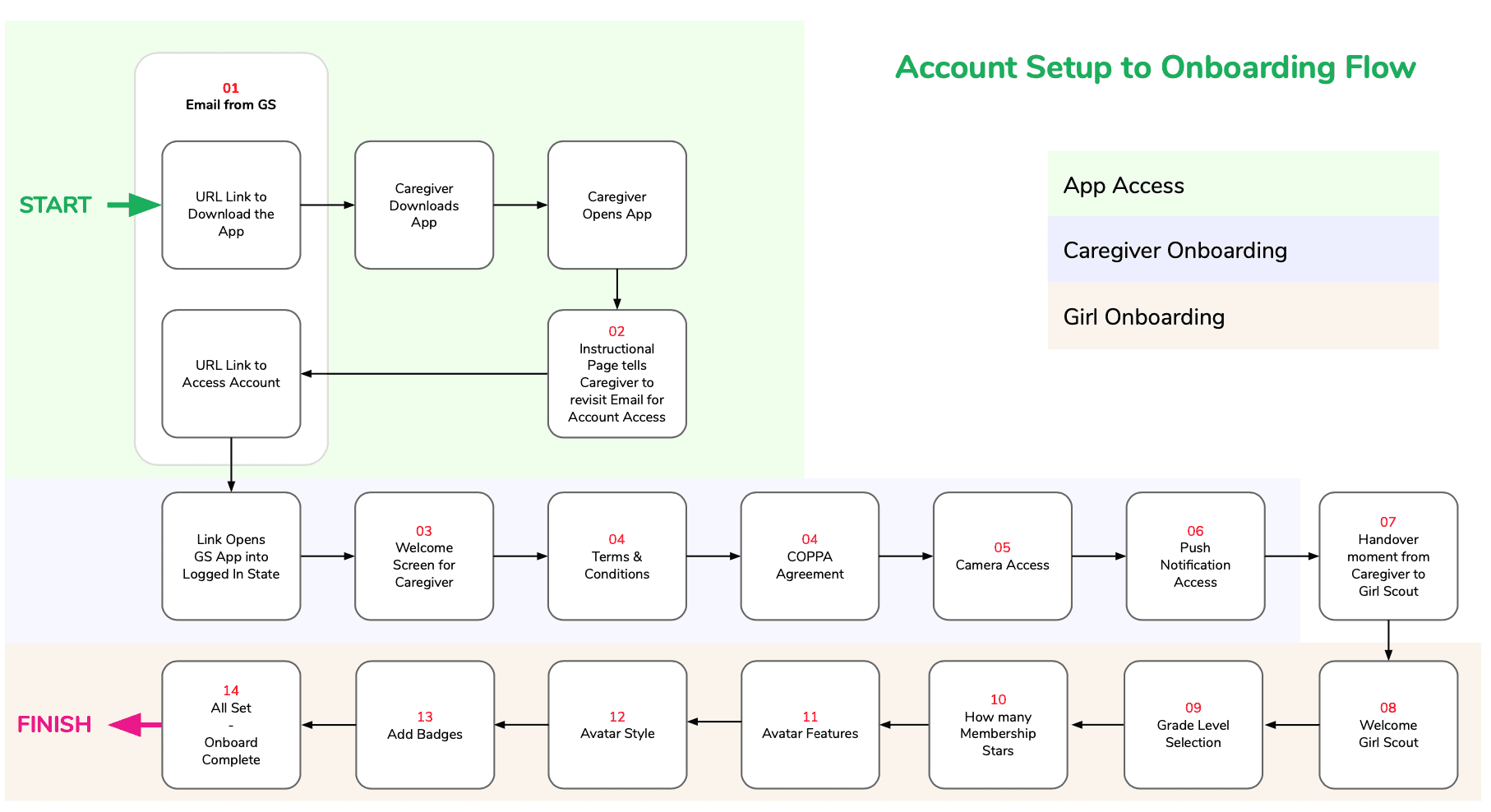
App onboarding flow
Research showed 72% of Junior girls learn new apps through in-app tutorials and exploration, so we designed onboarding to feel playful and intuitive rather than instructional.
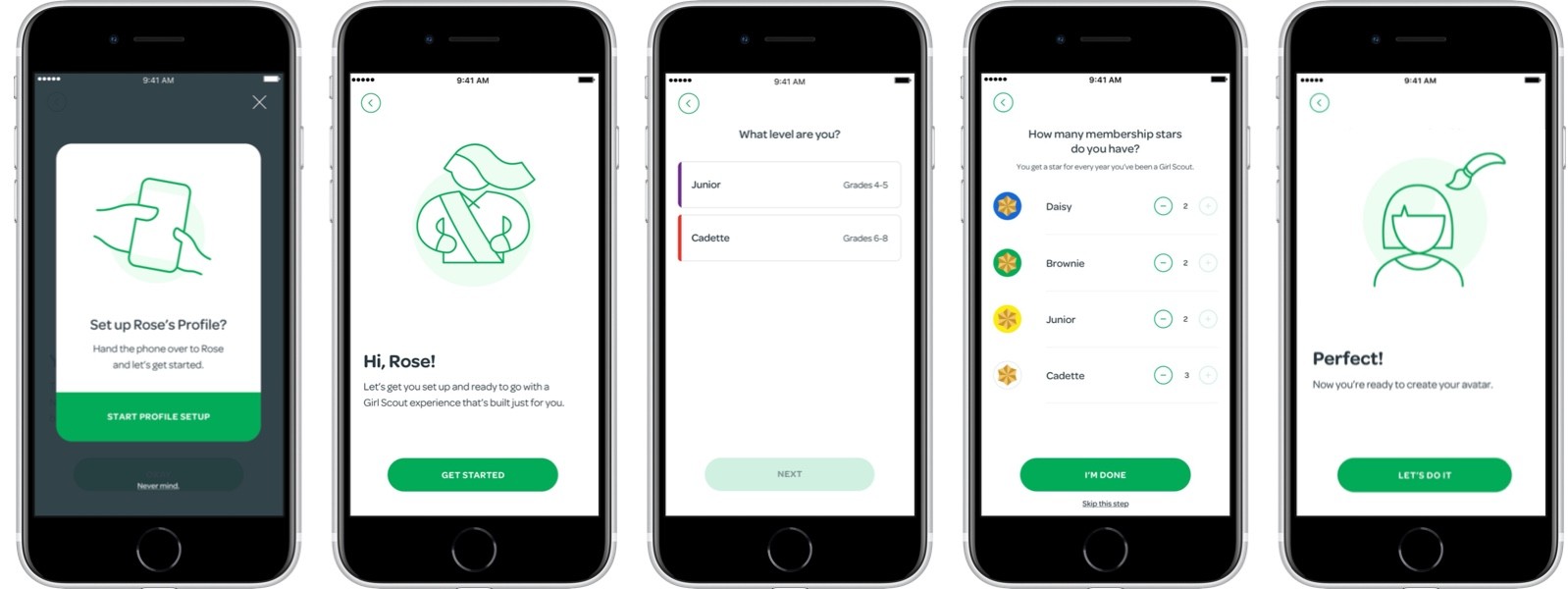
Onboarding screens
GIRLmoji: Identity as Motivation
As a Black woman, I knew firsthand what it meant for a girl to open an app and not see herself represented accurately. Representation without care can be just as alienating as no representation at all. That experience informed every advocacy decision I made around GIRLmoji.
Girls created a customizable avatar, GIRLmoji, built in Unity 3D. Early concept testing revealed girls were unfamiliar with the term "avatar" but immediately understood it through comparisons to Bitmoji and Minecraft characters.
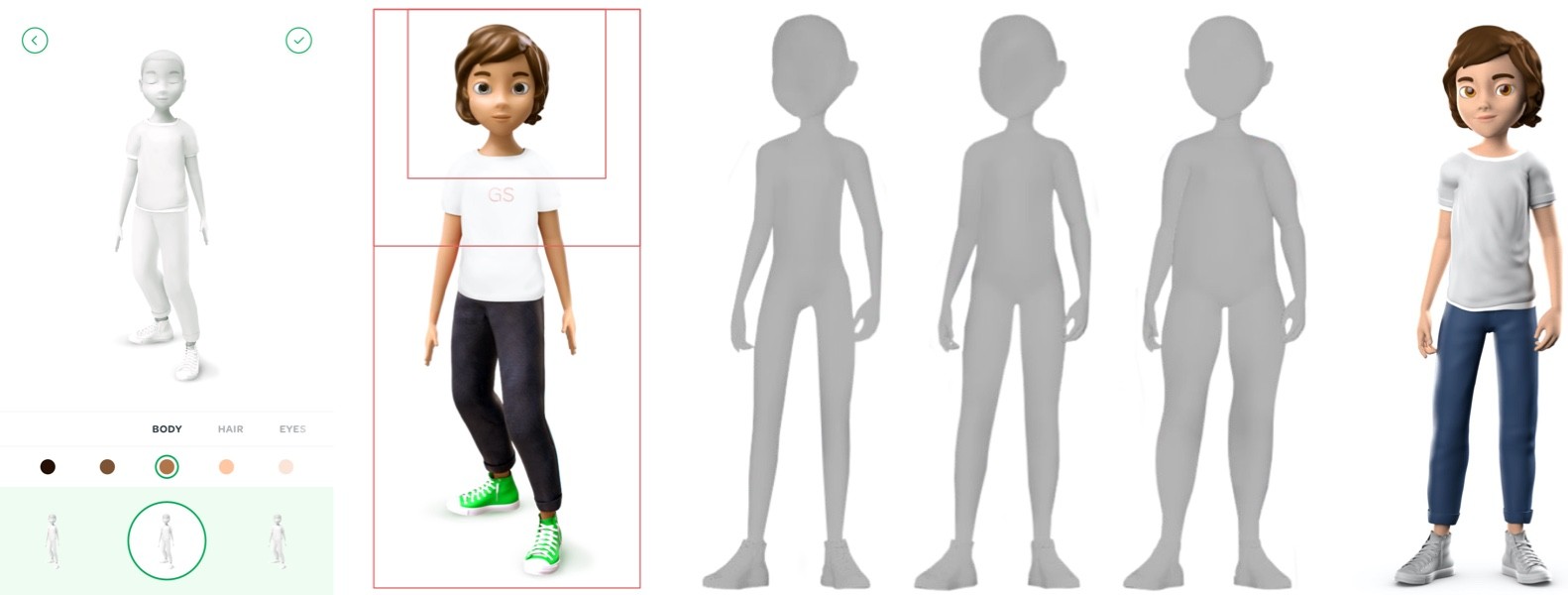
We adjusted the avatar stance to be less aggressive
Working closely with the vendor team, I advocated sprint after sprint for:
Realistic skin tones
Inclusive religious and modest clothing options
Separation of "who I am" from "what I look like"
Girls and parents explicitly told us representation mattered. The data confirmed it
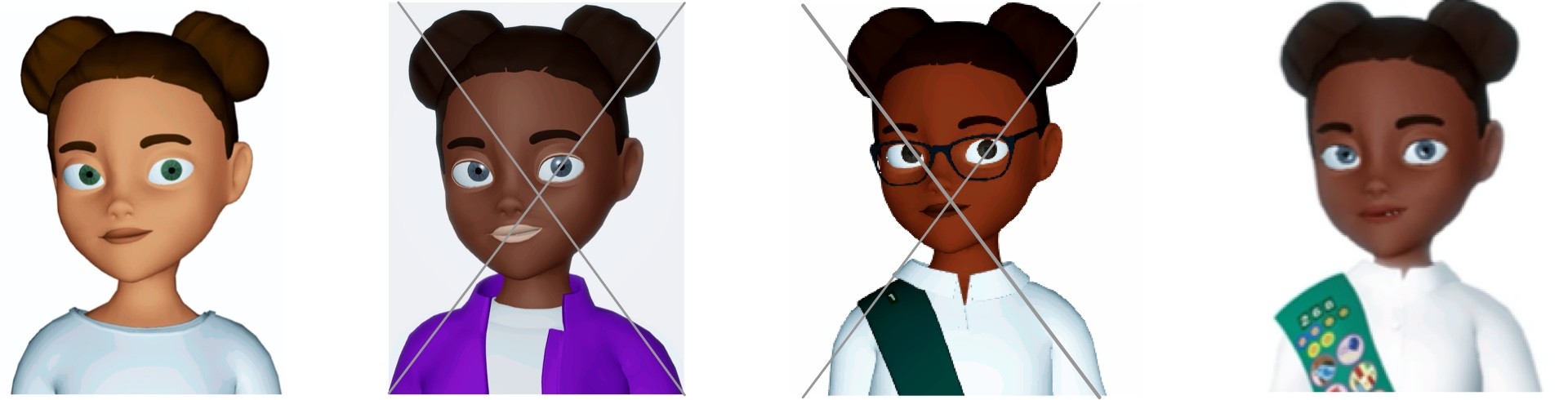
Skin tone and lip pairings that weren't realistic


Skin tones and lip colors
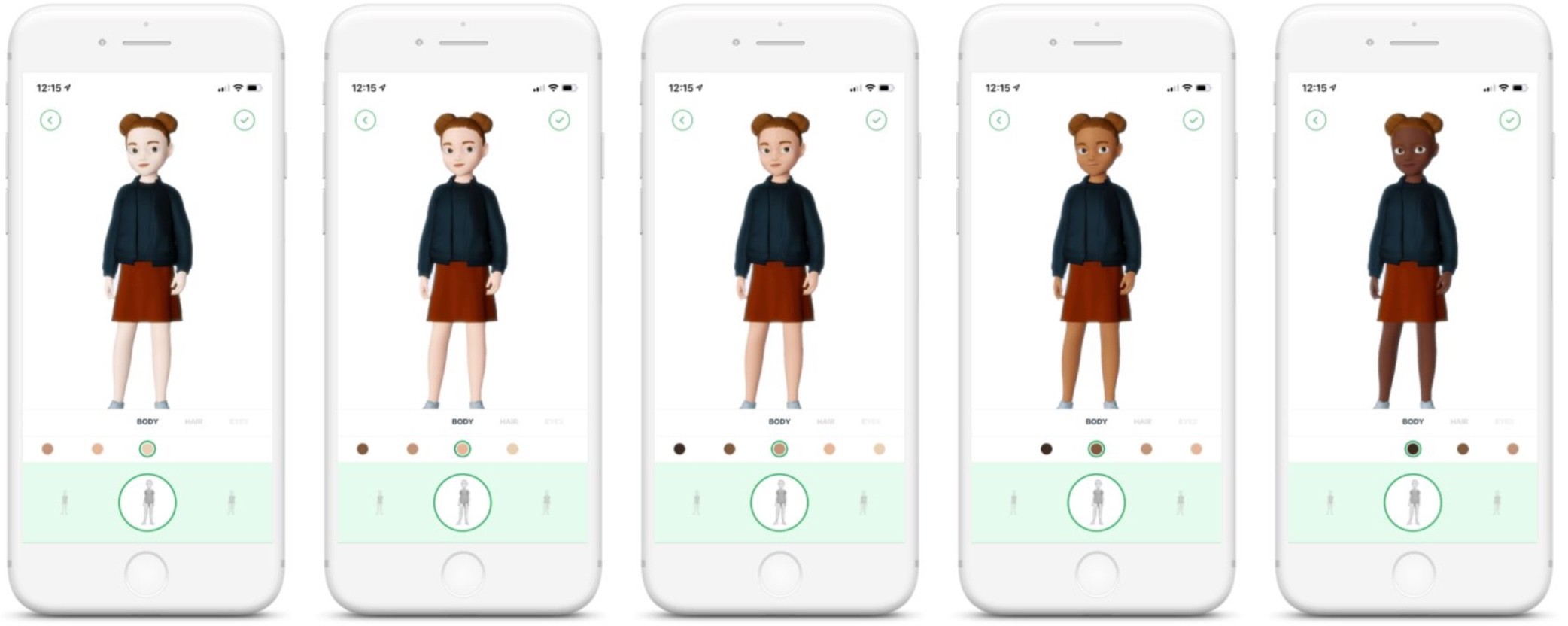
GIRLMoji avatar skin tones
I worked directly with Girl Scouts' Chief Girl Psychologist throughout development. Through those conversations we identified that body type selection appearing first in the customization flow risked reinforcing body image anxiety. We reordered the flow to start with hairstyle and creativity-focused customization instead, grounding the experience in expression rather than appearance.
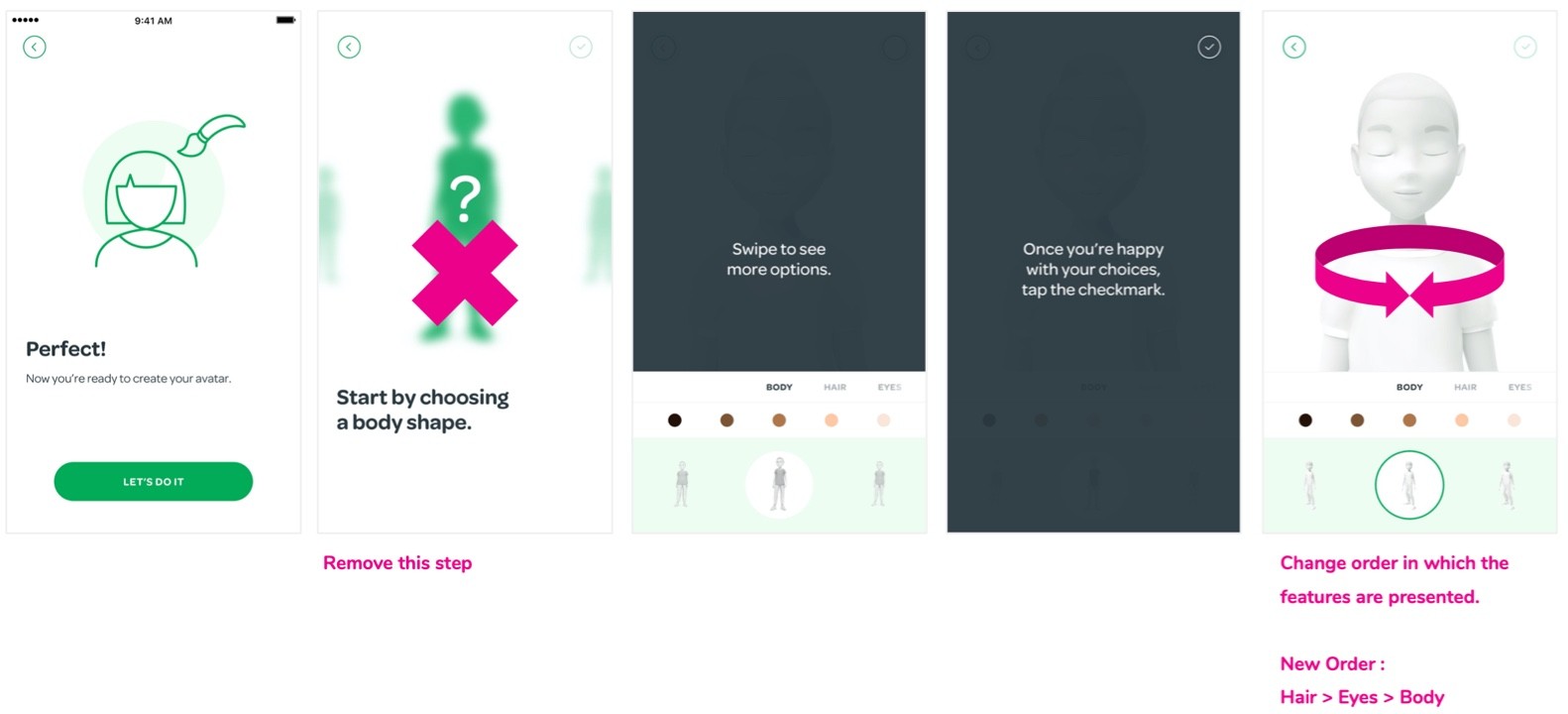
We adjusted the onboarding process away from body framing
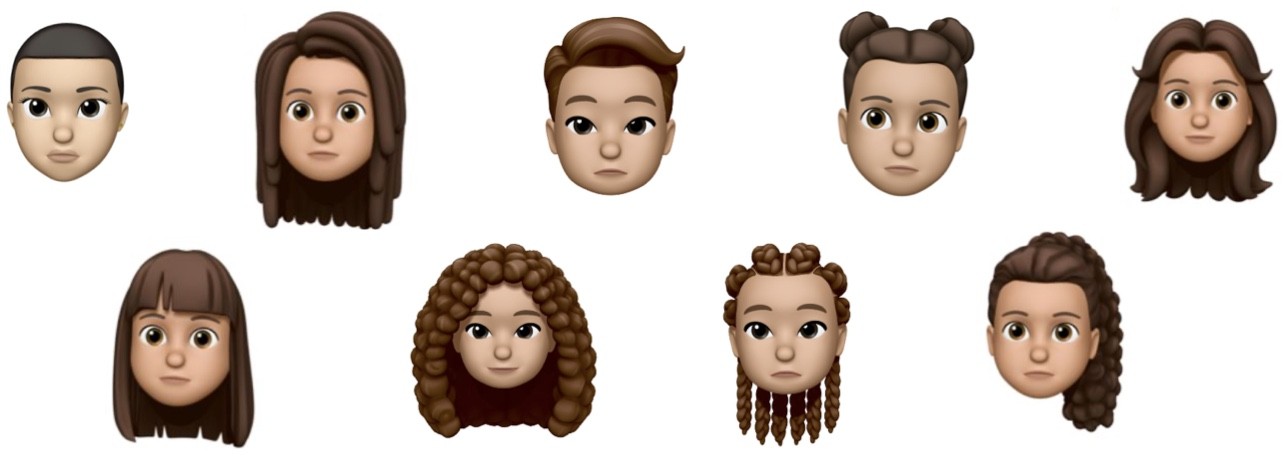
Hairstyles
Onboarding Usability Results
82% of girls created an avatar
Avatar editing became the most revisited feature
Girls quickly understood customization categories
Membership star confusion was resolved with microcopy clarification
Overall onboarding was rated intuitive and easy to use
The avatar proved to be a primary engagement driver.
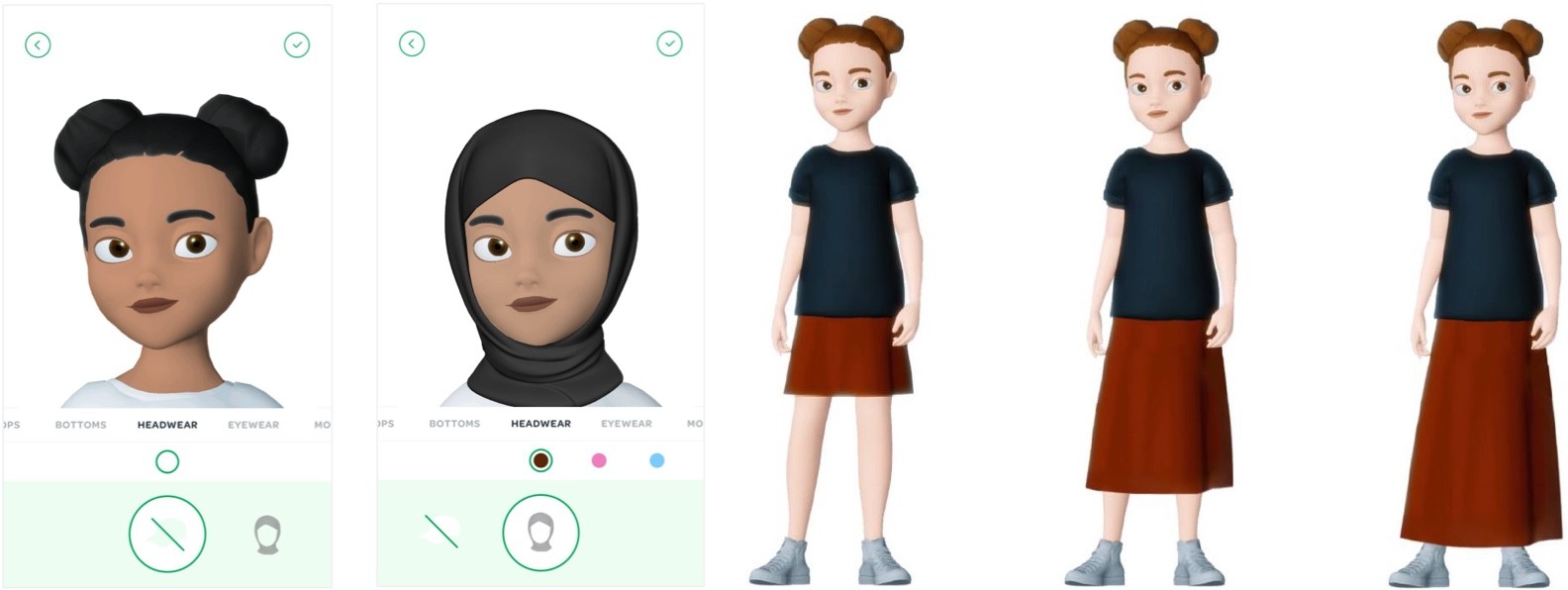
Inclusive religious and modesty features
Home: Bridging Physical Troop & Digital Identity
The Home screen was designed around a single insight from research: girls felt more motivated when their digital experience reflected their real troop, not just their individual progress.
Rather than building a generic dashboard, we anchored Home around three elements that connected digital identity to physical belonging:
Stylized GIRLmoji avatar
Troop details
Troop member list
The design intentionally carried onboarding elements through to Home so girls felt continuity rather than starting over in a new context.
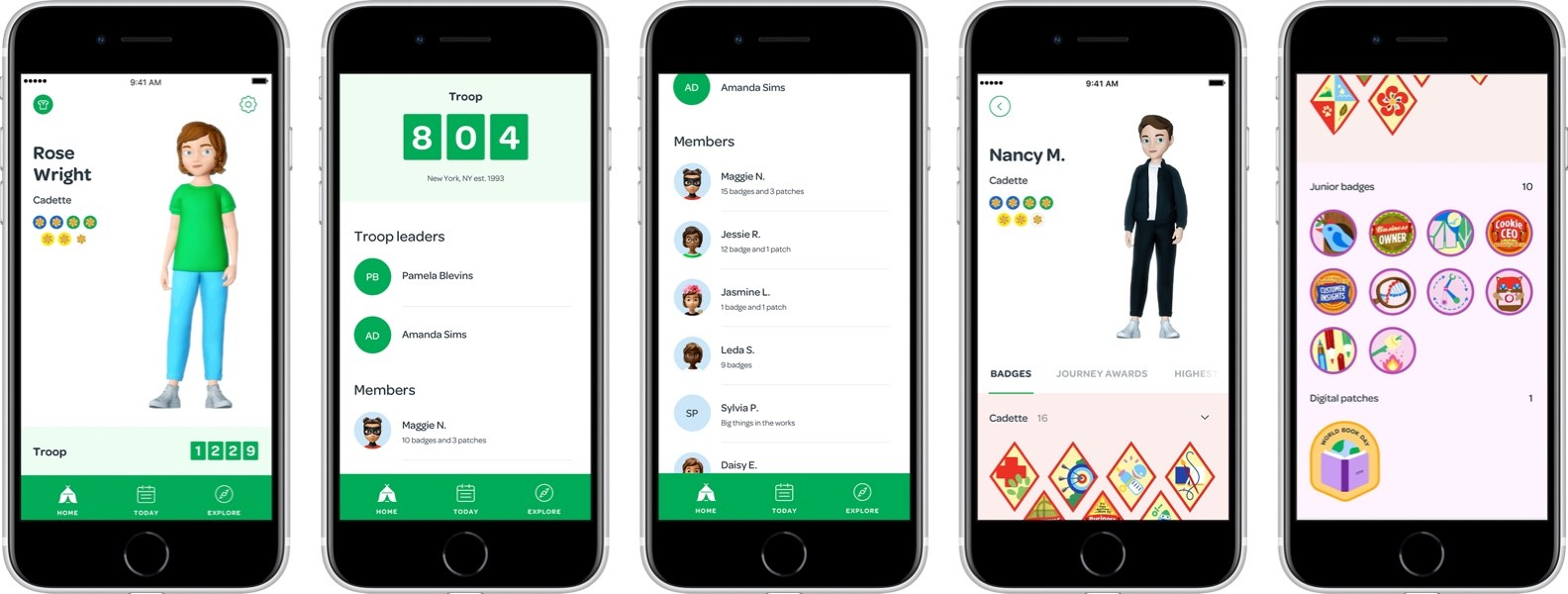
Home screens
Home Usability
The behavioral data validated the strategy. Nearly all girls tapped the avatar edit gear immediately, confirming that identity was a primary engagement driver from the first moment of use. Girls also recognized onboarding elements carried through to Home, reinforcing continuity between the two experiences.
Most telling, girls wanted all troop members to have avatars. As one girl put it: "It's more funner if they do."
That single comment captured what the research confirmed. Belonging was not just a feature, it was the point.
Today: Engagement Hooks & Safe Communication
The Today surface was designed to answer one question: what brings a girl back tomorrow?
We built repeat engagement around three mechanisms that worked within Girl Scouts' program structure rather than against it:
Time-bound digital events tied to program milestones
Progress markers that made badge activity visible between meetings
A troop-wide message board that encouraged communication without enabling private messaging
The message board required the most deliberate design thinking. Under COPPA constraints and heightened safety expectations, traditional social mechanics were not viable. Rather than simply removing social features, we designed a layered safety architecture:
All messages were visible to the full troop, eliminating the conditions that enable private bullying
Profanity filtering caught inappropriate language automatically
Bully flagging surfaced concerning content for human review
Troop leaders served as the human layer of moderation and oversight
We stress tested the filtering extensively during development. It worked.
This approach preserved the sense of community girls wanted without introducing the exposure families and GSUSA feared. Engagement and guardrails do not have to be in tension. This section proved they can reinforce each other.
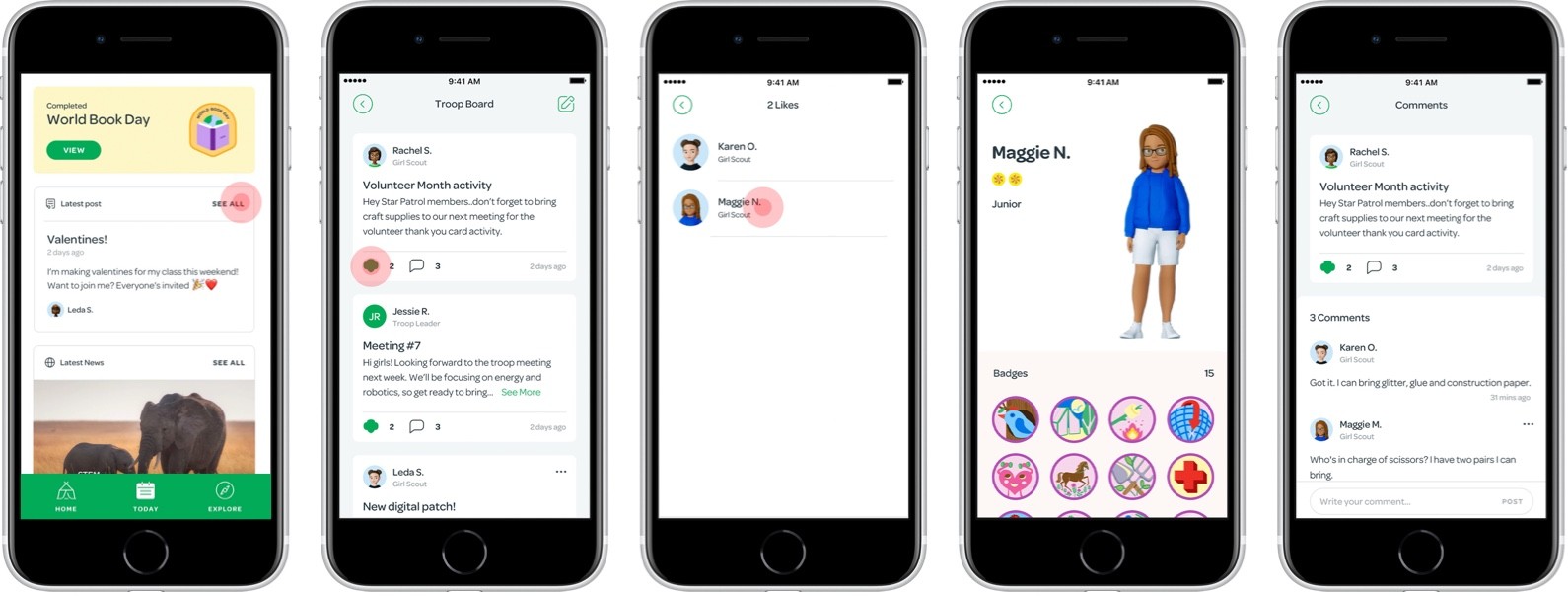
Today screens showing news and communication features
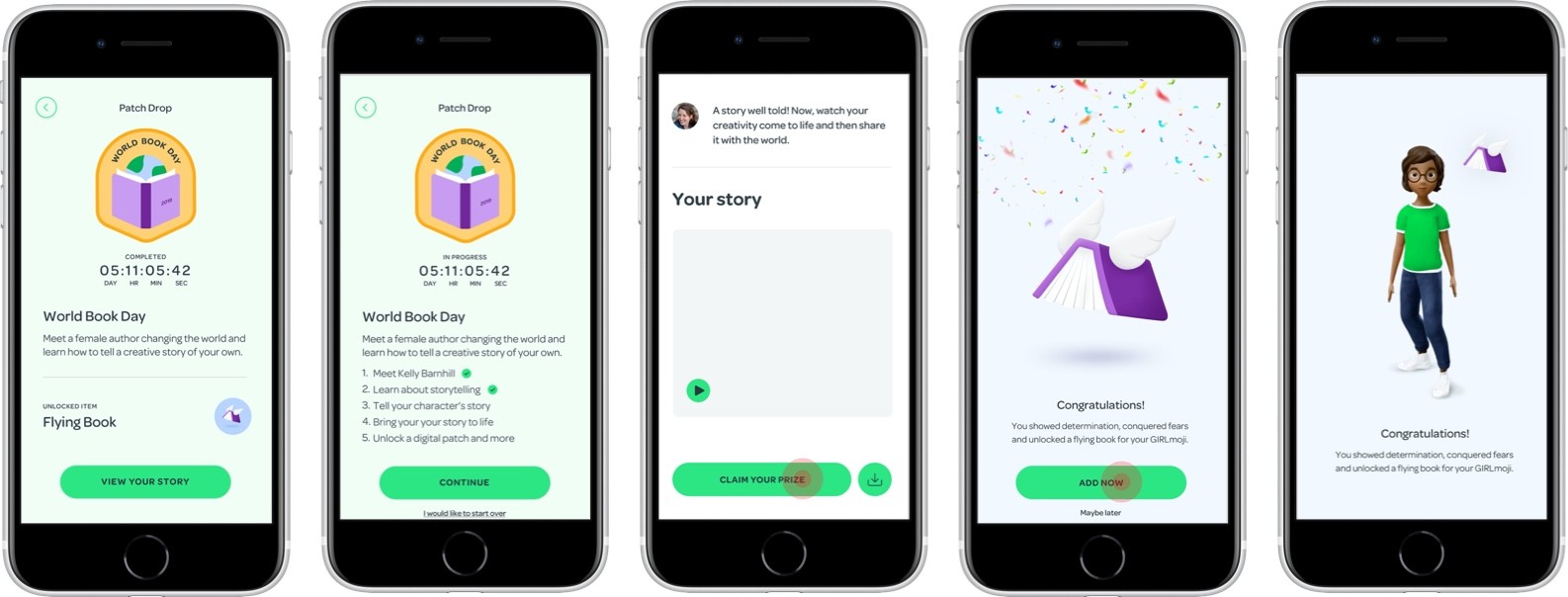
Interactive patch drop activity
Today Usability Results
Strong engagement with Troop Board communication across participants
60%+ rated the app easy and enjoyable
66% said they would recommend the app
70% wanted continued access
Explore: Digital Badge Ecosystem
Explore was the programmatic core of the app and the surface girls spent the most time in. The design challenge was making a large, complex badge catalog feel browsable, personal, and motivating rather than overwhelming.
Girls could:
Browse badges, journeys, awards, patches
Filter by topic or status
Bookmark favorites
Track earned vs. in-progress badges
Use AR badge scanner (Wikitude)
Add badges manually
The avatar's digital sash displayed earned achievements visually, creating a direct connection between a girl's identity and her program accomplishments. Exploration and identity reinforced each other.
The Honor System
Manual badge adding was intentionally preserved without verification. Girls could self-report badges earned outside the app.
This was not a technical limitation. It was a values decision rooted in Girl Scout culture. The program has always operated on trust and self-reporting. I consistently advocated for this approach with vendors who pushed for verification systems, reiterating that the honor system was not a workaround. It was core to who Girl Scouts are.
The Badge Scanner
The AR badge scanner was the most technically ambitious feature in the app. Initial usability testing revealed significant friction. Scan times were slow and recognition failed frequently on real-world badges.
The root cause was straightforward. We had trained the image recognition model on brand new badges. Real badges do not stay new. Girls play outside. Badges get dirty, torn, and worn.
We went back and retrained the model the right way. We damaged badges deliberately, dragged them through dirt, spilled chocolate milk on them, tore edges, and used those real-world conditions to expand the dataset. Scanner reliability improved significantly after retraining.
It was a reminder that usability testing in controlled conditions is not enough. You have to design and test for how people actually live.
Explore Usability
Girls understood earned vs. unearned badges through color distinction
Bookmarking was intuitive, girls naturally called it "favoriting"
Badge scanner usability improved significantly after dataset expansion
Girls enjoyed browsing and swiping badge content
Many girls wanted collaborative badge completion through the Troop Board
Explore generated 2.8x more page views than any other section of the app
Explore Section Gallery
Swipe to explore →
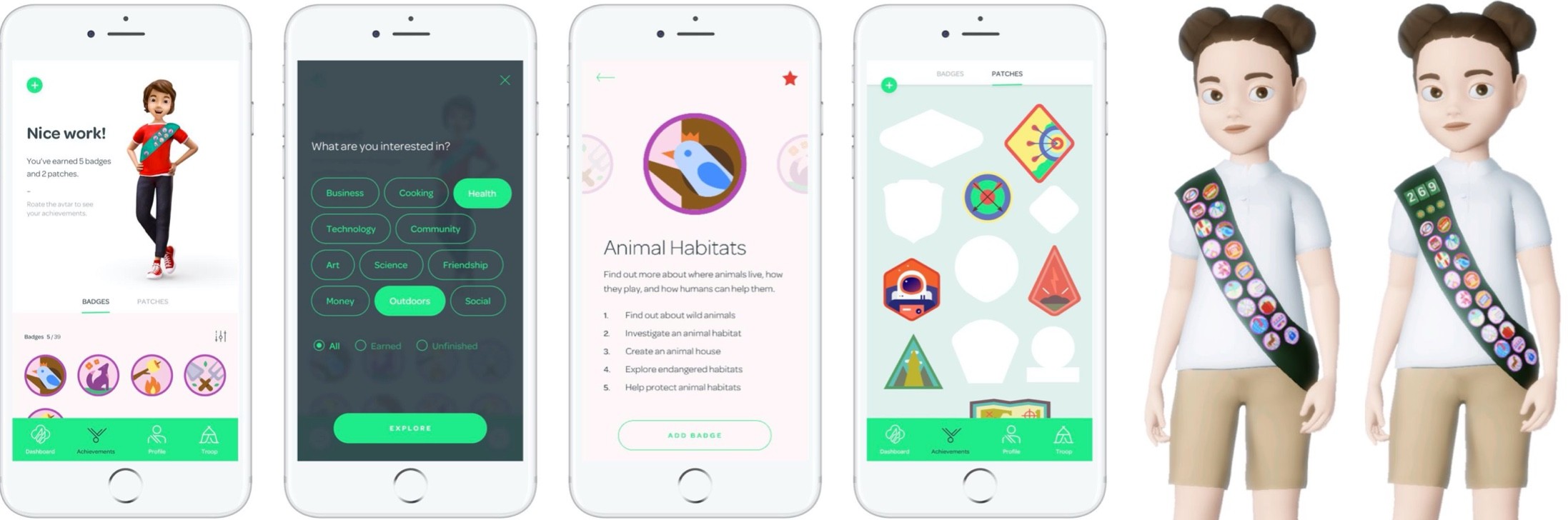
Early concept of Explore section
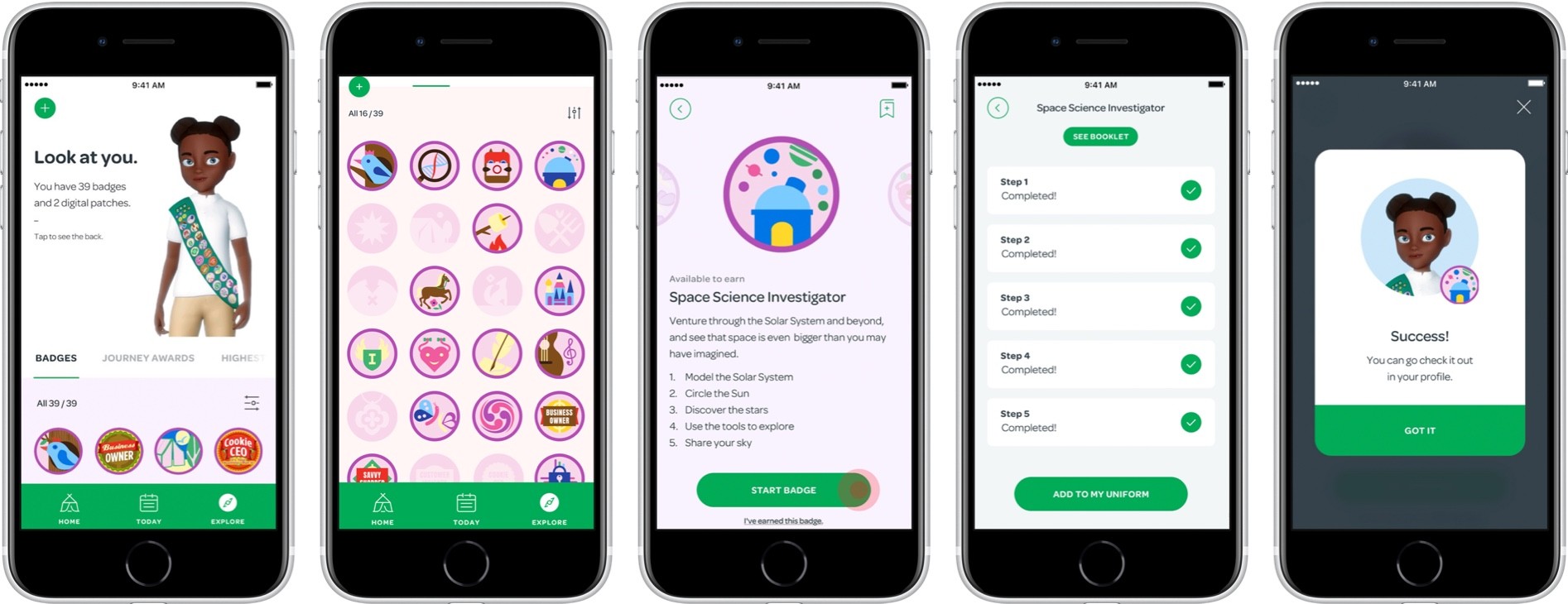
Explore section
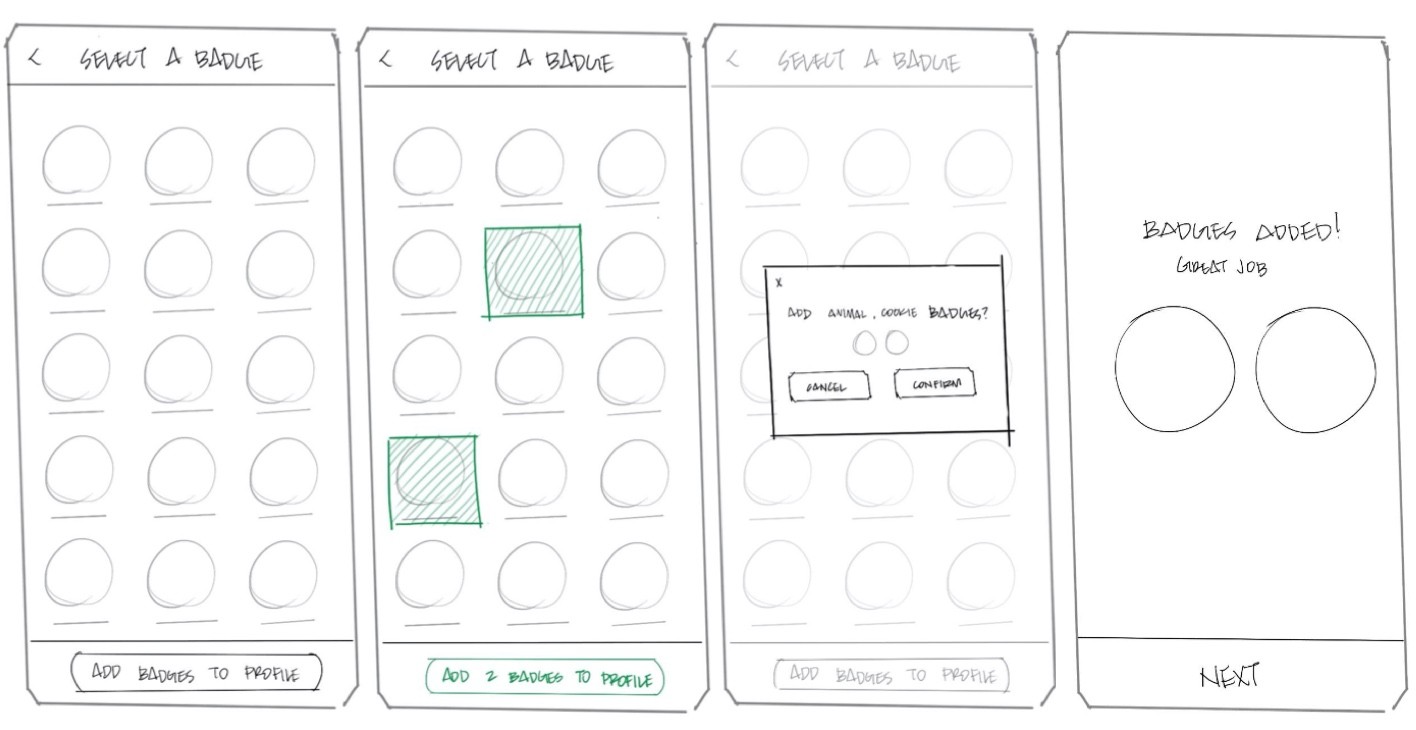
Badge mock-ups
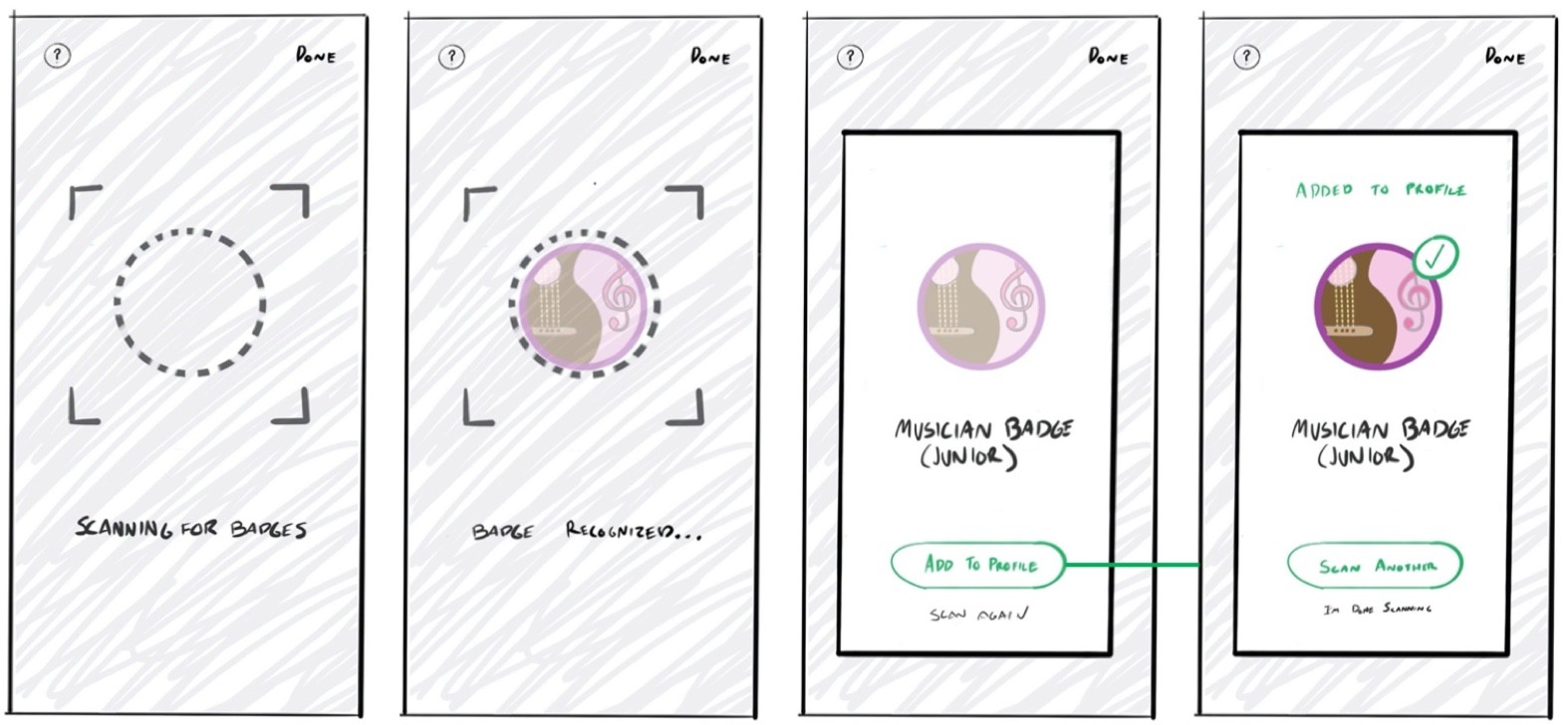
Badge scanner mock-ups
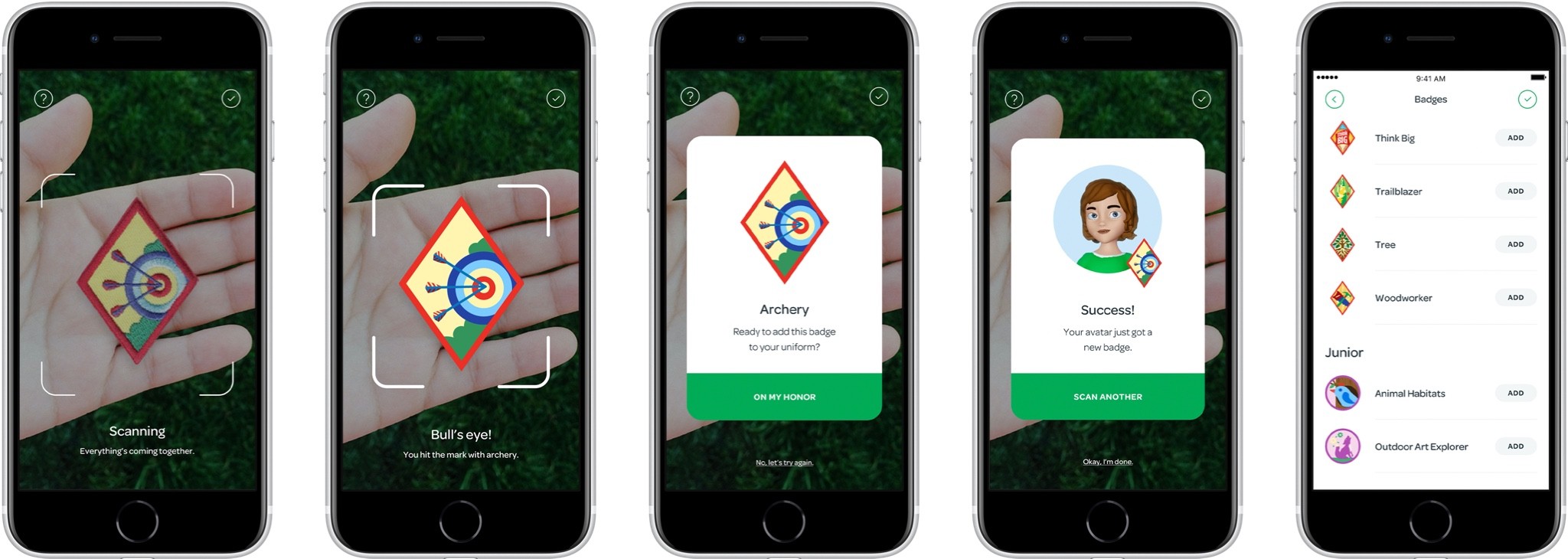
Badge scanner AR feature
Results
Among approximately 2,000 invited participants, the app validated all three strategic principles.
Identity drove engagement. 82% of girls created a GIRLmoji avatar and avatar editing became the most revisited feature across the entire app. The bet on identity as a motivational anchor paid off.
Program content activated early. 55% of girls manually added badges during onboarding and 65% reported earning two or more badges, indicating that girls connected to program content from the first session, not just over time.
Independent exploration exceeded expectations. Explore generated 2.8x more page views than any other section, reinforcing that girls wanted to discover and pursue badge content on their own terms between troop meetings.
Overall experience validated.
60%+ rated the app easy and enjoyable to use
66% said they would recommend it
70% wanted continued access
The results confirmed that a safe, structured digital extension of the Girl Scout program was not just viable. It was wanted.
Development of the next phase was paused in March 2020 due to COVID-related infrastructure priorities at GSUSA. The pilot results remain a strong foundation for future investment.
Leadership & Organizational Impact
Holding the Vision Through Vendor Instability The most significant leadership challenge on this project was not the design. It was keeping the product alive and coherent through four RFP processes and three full vendor transitions over 2.5 years. Each transition meant everything stopped. New vendors had to be selected, onboarded, and brought up to speed on a deeply specific cultural context from scratch. The product vision survived every handoff because I held it.
Cultural Translation Vendors consistently underestimated how much Girl Scout culture needed to shape every design decision. My job was to be the cultural translator, reiterating values, pushing back on proposals that drifted, and ensuring the product reflected who Girl Scouts are, not just what the backlog required.
Advocacy Grounded in Lived Experience The representation advocacy for GIRLmoji was the most personally meaningful decision on this project. As a Black woman who grew up without seeing herself accurately represented in digital products, I pushed for realistic skin tones, inclusive clothing options, and a separation of identity from appearance, sprint after sprint, until the product reflected the full range of girls it was designed to serve. Representation without care can be just as alienating as no representation at all.
Designing With Subject Matter Expertise Working directly with Girl Scouts' Chief Girl Psychologist throughout development shaped consequential decisions that research alone could not have surfaced. That collaboration is a model for how design and subject matter expertise should work together in products for vulnerable populations, and a direct parallel to how I approach design in healthcare contexts.