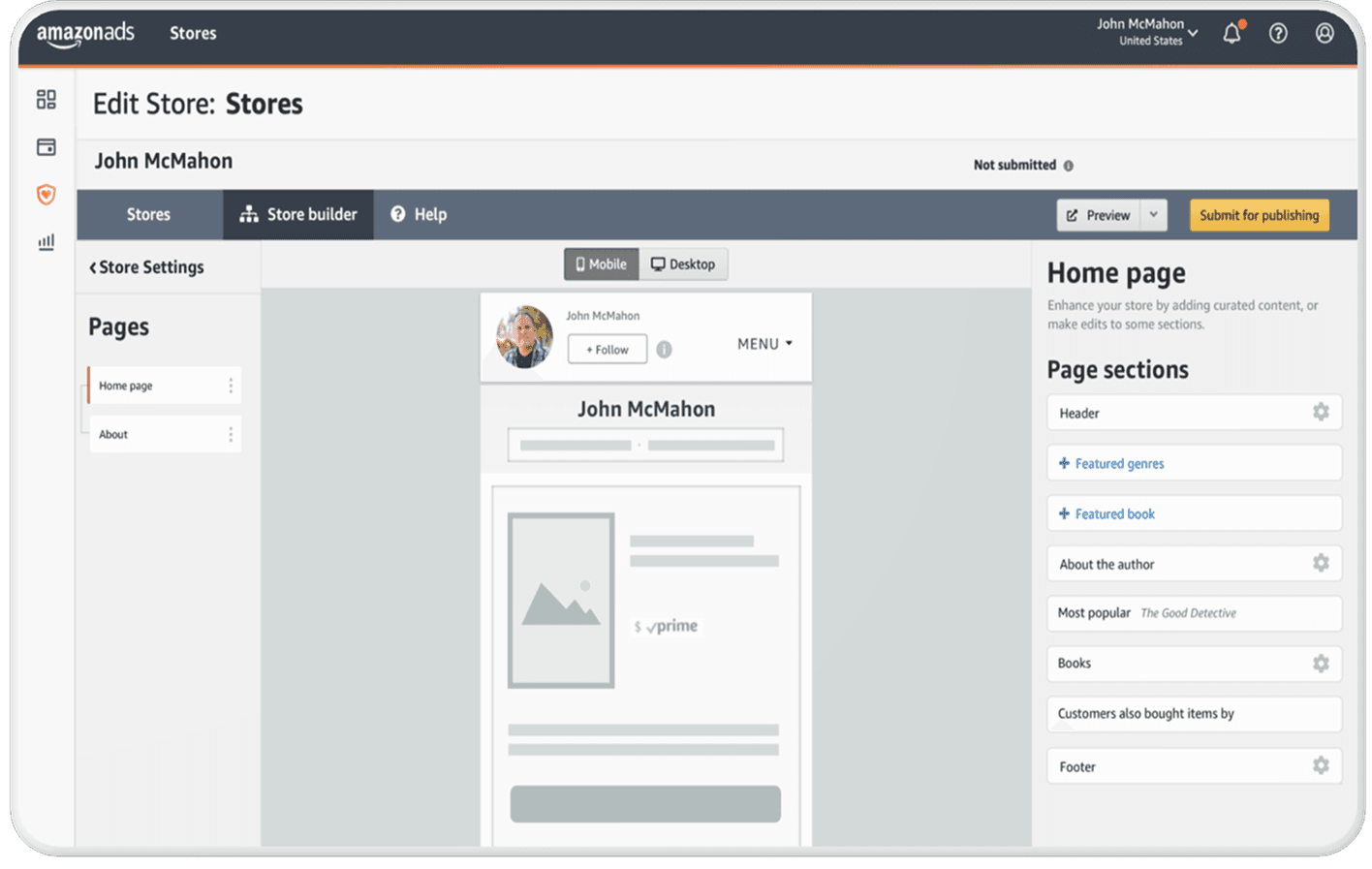
Advertising console Author Stores Builder
Overview
Running display ads on Amazon required a $35,000 minimum budget. For most of the publishing industry that meant only major publishers could participate. Independent authors, Kindle Direct Publishing and traditionally published, had limited to no access to affordable tools that could help them reach readers, build a following, and grow sales.
The Books Ads team set out to close that gap. The team expanded advertising access for 600,000 independent authors and replaced static Author Pages with a branded storefront. The work was grounded in a three-part research study with 602 shoppers surveyed, 18 usability sessions, and 11 author interviews; in addition to controlled experiments.
My Role
I led UX strategy across Sponsored Products, Sponsored Display, and Author Stores framing them as a single growth system.
My responsibilities included:
Aligning design direction, research, and success metrics across
Partnering with product, engineering, research, and data science
Sequencing delivery to balance UX ambition with engineering feasibility
Owning outcomes through pilots, experimentation, and validation
People leader of 5 UX Designers and 1 UX Writer
The Problem: Architectural Constraint
Before Sponsored Display, the minimum budget to run display ads on Amazon was $35K. That number worked for Random House. It did not work for a self-published author.
Amazon was strong at capturing demand but weak at sustaining author growth.
Book discovery largely happened off-platform
Independent and Kindle authors had no affordable path to advertise beyond basic search placements
Publisher-backed authors were dependent on their publishing house for promotion decisions
Author Pages were static, transactional, and difficult to navigate
Discovery, conversion, and loyalty were treated as separate problems, resulting in a fragmented author journey with no clear ownership and no infrastructure for independent authors to build on.
Opening Access to Traditionally Published Authors
The population problem Before this launch, only authors who self-published through Kindle Direct Publishing had access to Amazon Ads. Traditionally published authors, an estimated 600,000 in the US alone, had no way to promote their books on Amazon independently. They were entirely dependent on their publishers to advertise on their behalf.
What we built We opened self-service advertising access to traditionally published authors for the first time, with a registration experience through Author Central and full access to Sponsored Products, Sponsored Brands, and Lockscreen Ads. The campaign experience was designed at full parity with the existing author advertising experience so traditionally published authors could get started without a learning curve.
What it produced Within weeks of launch, more than 3,000 authors created advertising accounts, 800 launched their first campaign, and those campaigns generated 28 million impressions.
Ads Builder Gallery
Swipe to explore →
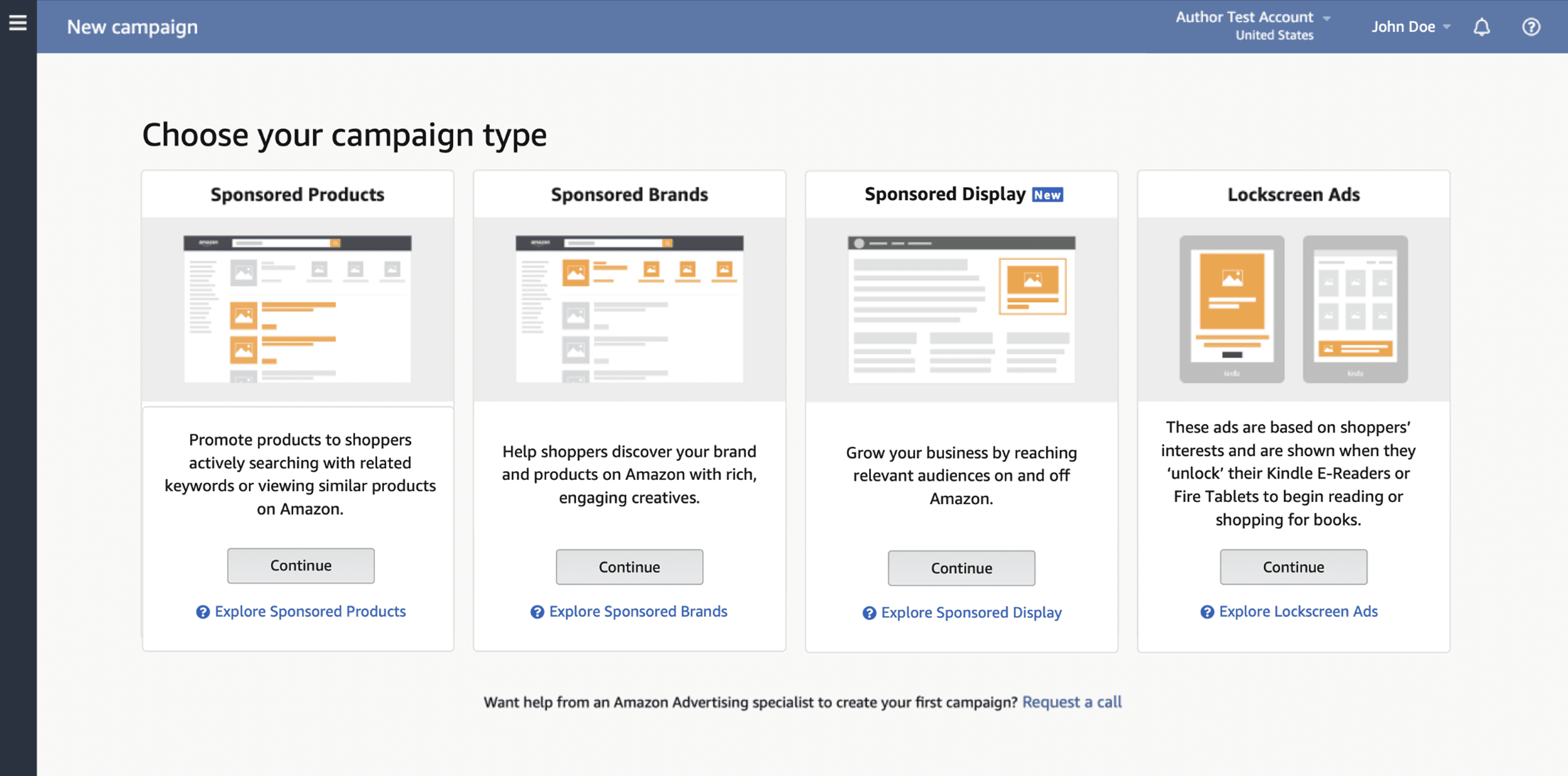
Sponsored Display added as a campaign type for Kindle Direct Publishing authors.
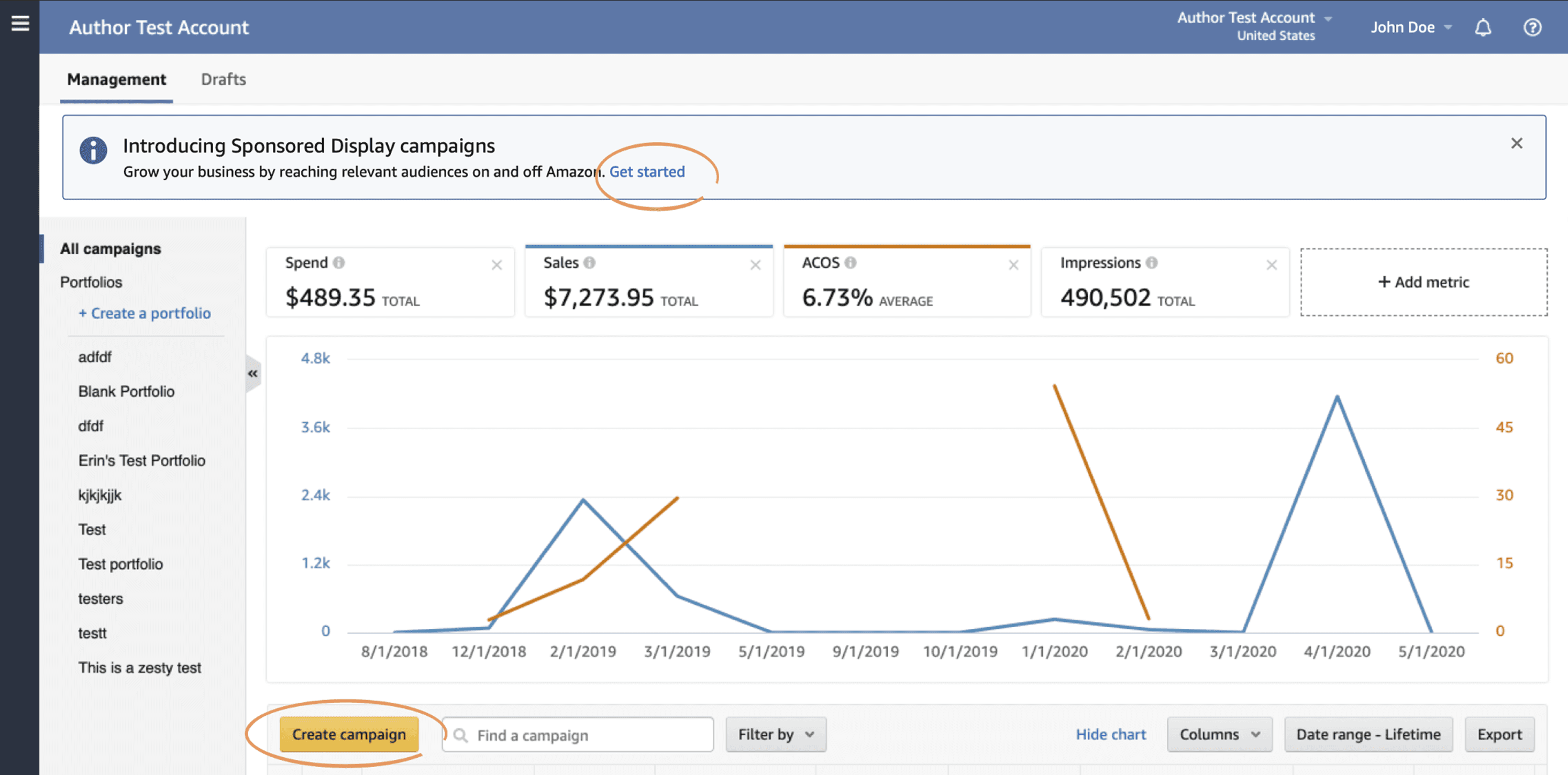
Ads builder alert banner announcing the launch of Sponsored Display ads for authors.
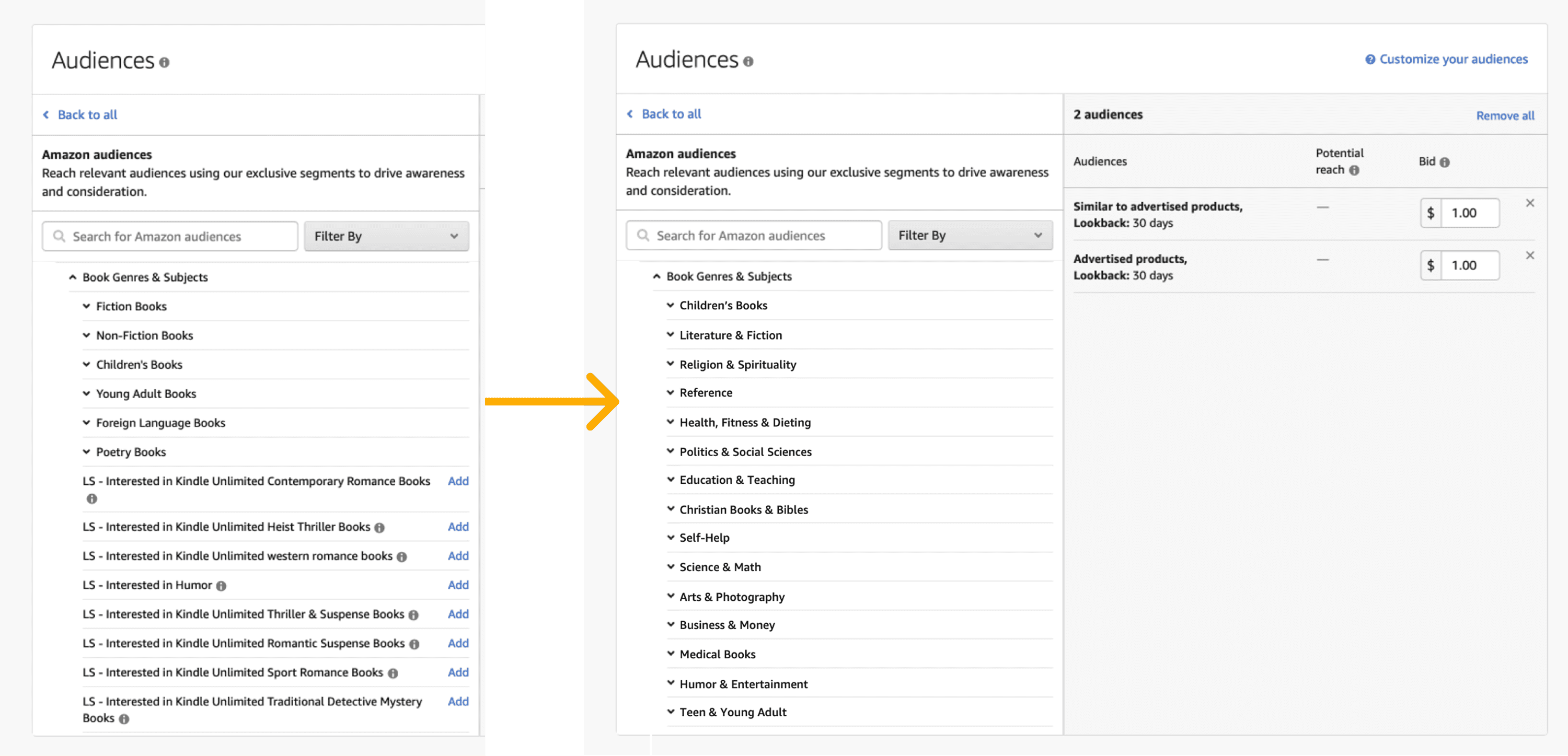
We modified the target list into easier browsable genre and sub-genres for authors
Extending Discovery off Amazon & Recovering Intent
The access problem Before this work, independent authors could only run ads within Amazon's marketplace, reaching readers who were already actively searching for books. There was no way to reach readers on the platforms where they actually discovered new authors, and no way to re-engage readers who had shown interest but not yet made a purchase.
What we built We expanded advertising access to include Goodreads, the Kindle app, and third-party websites and apps. Authors could now reach readers while they were browsing for their next book, not just while they were already searching on Amazon. Audience targeting gave authors more than 1,000 pre-built segments based on reading interests, genre preferences, and shopping behavior, allowing them to reach the right readers without needing a large budget or advertising expertise. The entry point dropped from $35,000 to $1 per day.
Sponsored Display Gallery
Swipe to explore →
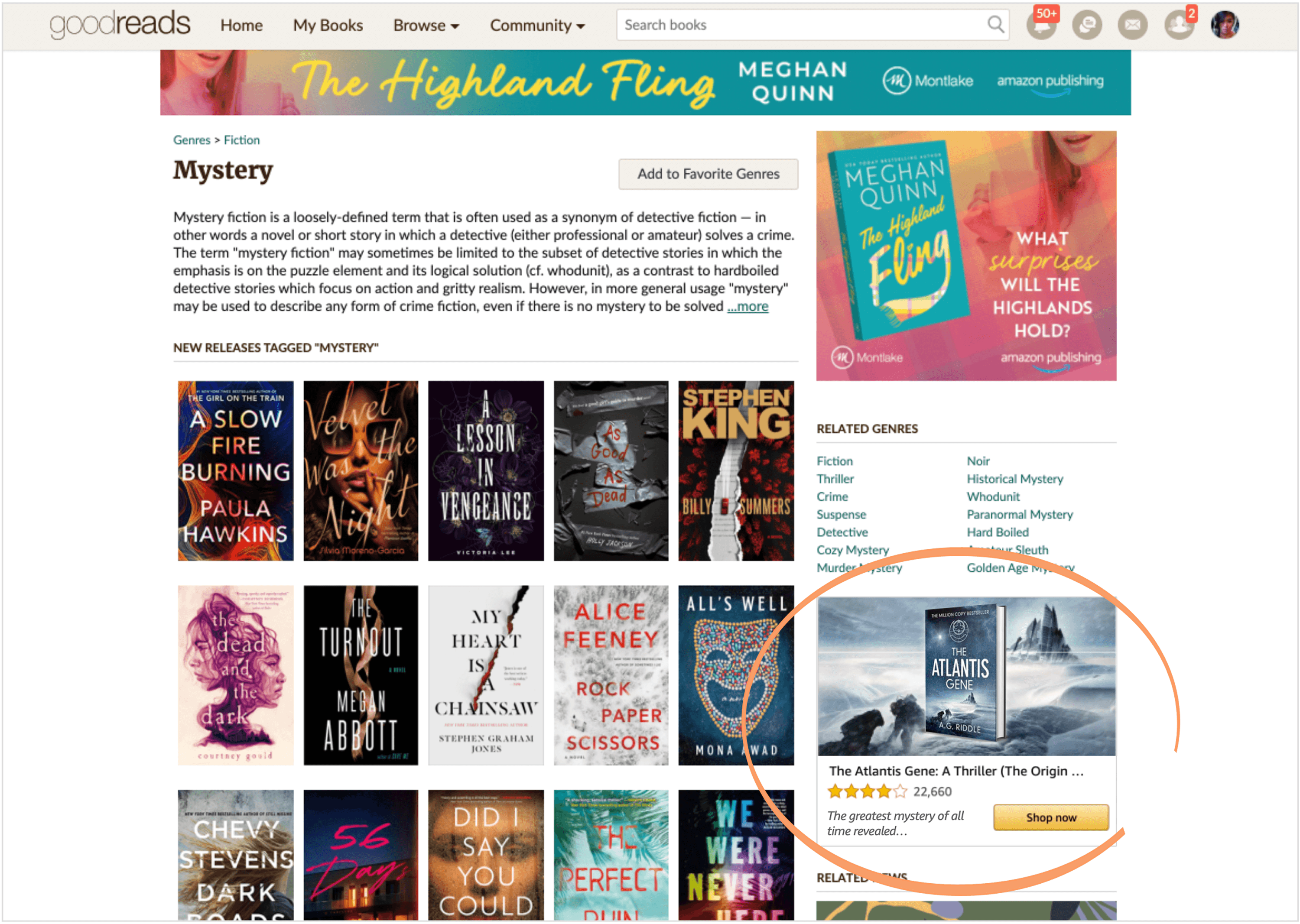
SD placement off Amazon
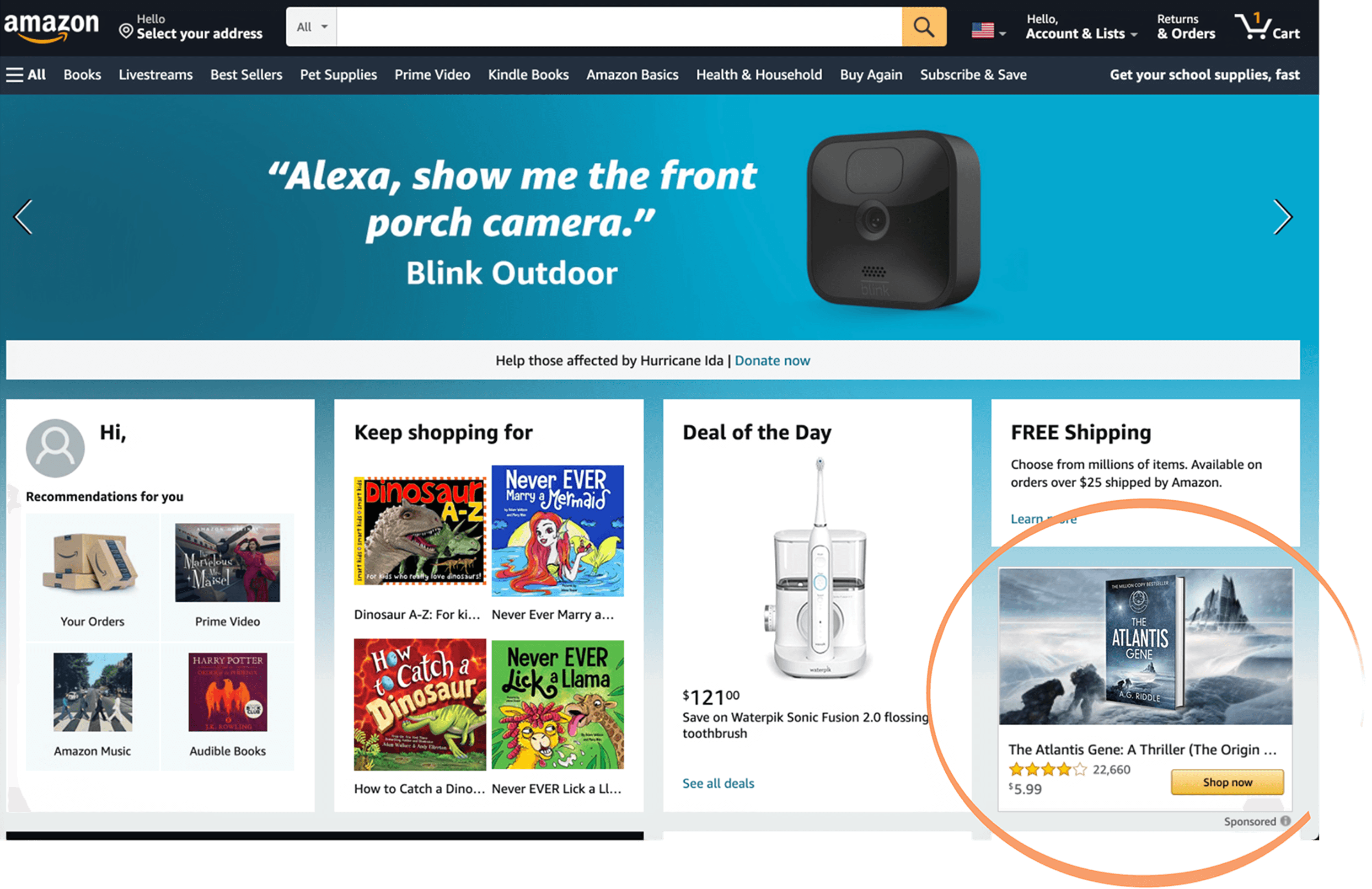
SD on Amazon's homepage
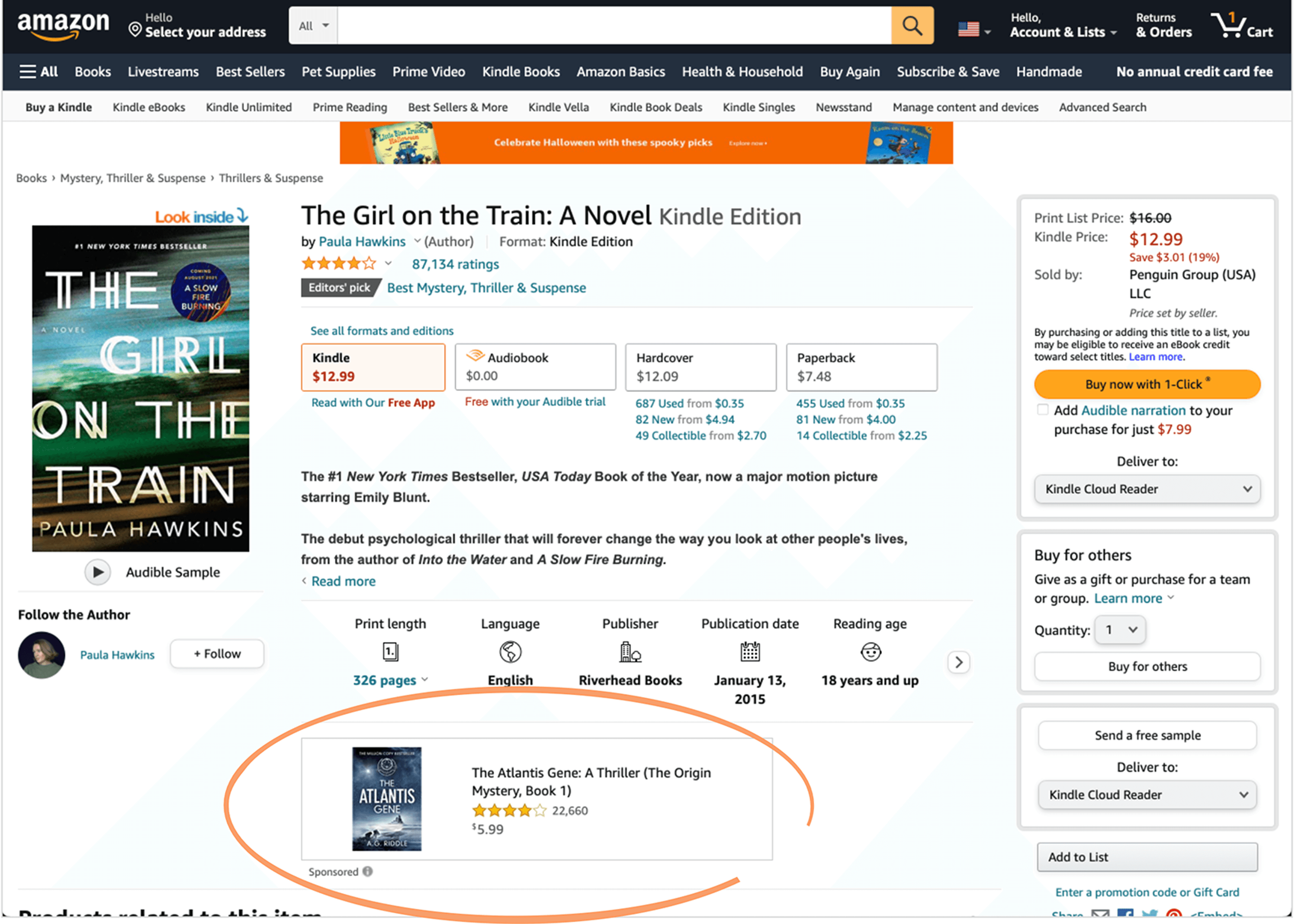
SD on Amazon's detail page
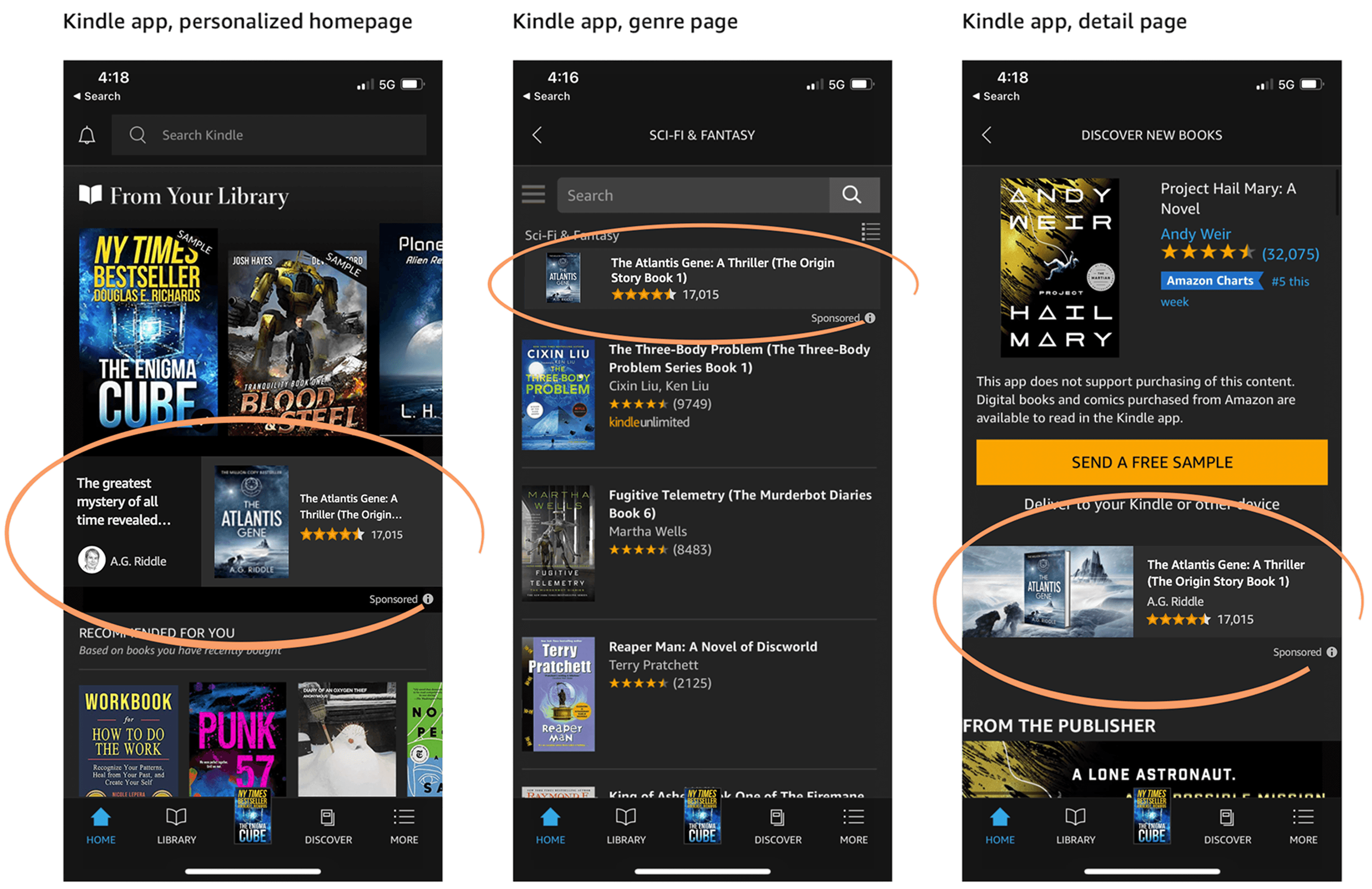
Kindle mobile SD ad placements
Author Stores: Converting Discovery into Sustained Engagement
The destination problem Expanding advertising access solved the reach problem. It did not solve the destination problem. When readers clicked on an author's ad, they landed on an Author Page that was cluttered, difficult to navigate, and offered no way to follow the author or explore their full catalog in any meaningful way. We were driving traffic to an experience that could not convert it.
What the research showed Research with 18 shoppers confirmed the gap. The existing Author Page experience rated 3.1 out of 5.0. Shoppers struggled to find series information, understand publication order, and get a clear sense of whether an author was right for them. When we showed the same shoppers an Author Store prototype, the rating jumped to 4.8 out of 5.0.
What we built Author Stores gave authors a structured, brandable storefront with modular layouts, series organization, follow integration, and guided onboarding. Rather than building a new system from scratch, we customized existing Amazon Brand Stores infrastructure for author use cases, which reduced engineering overhead and accelerated the timeline.
What it produced In a four-week controlled experiment comparing Author Stores to legacy Author Pages, the new experience drove 310,000 more units sold and a $3.2M increase in paperback sales. Readers engaging with Author Stores had a 43% higher order value. Authors who had previously pointed readers to their own websites said they would direct traffic to their Author Store instead.
Author Stores Gallery
Swipe to explore →
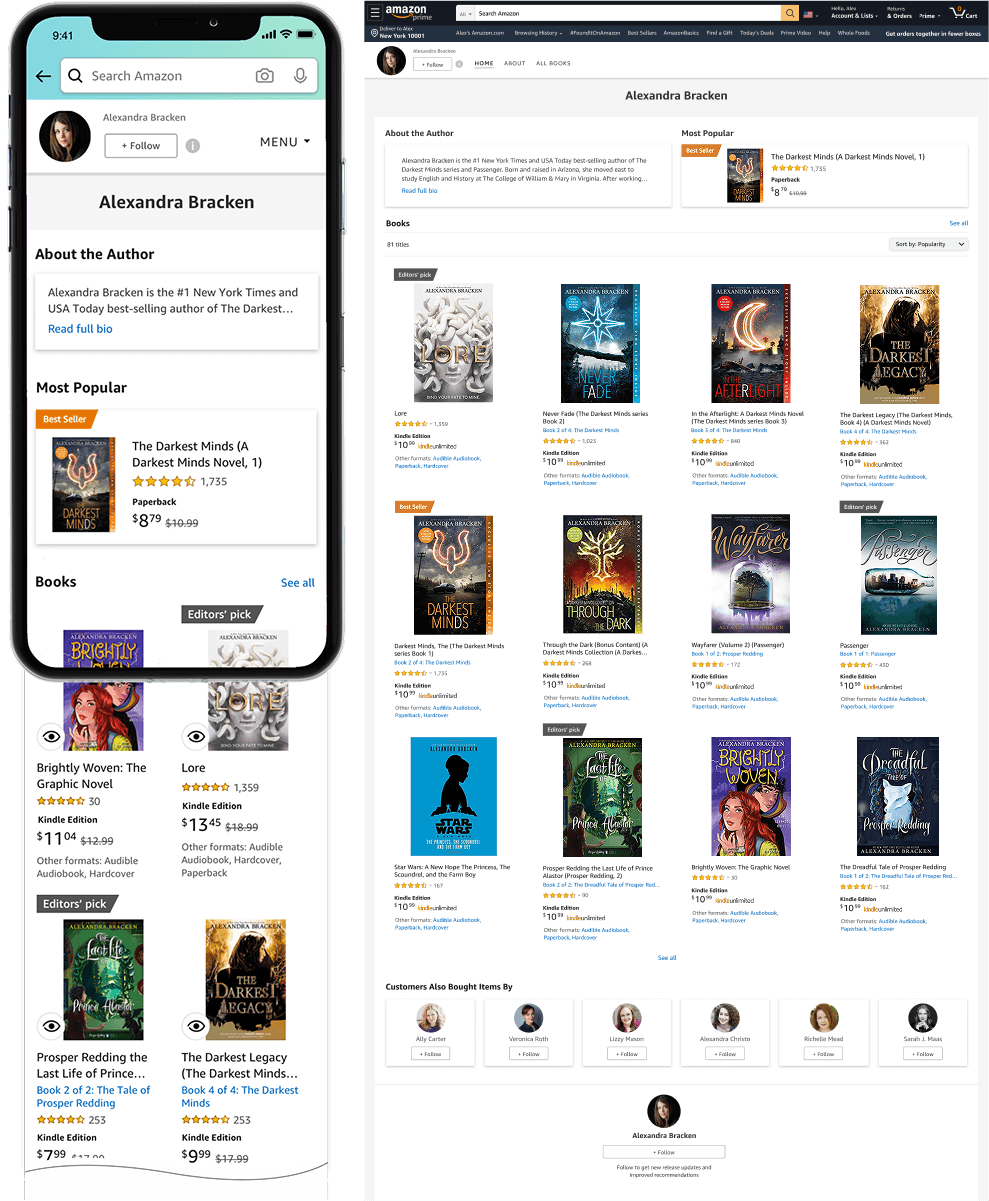
New Author Store
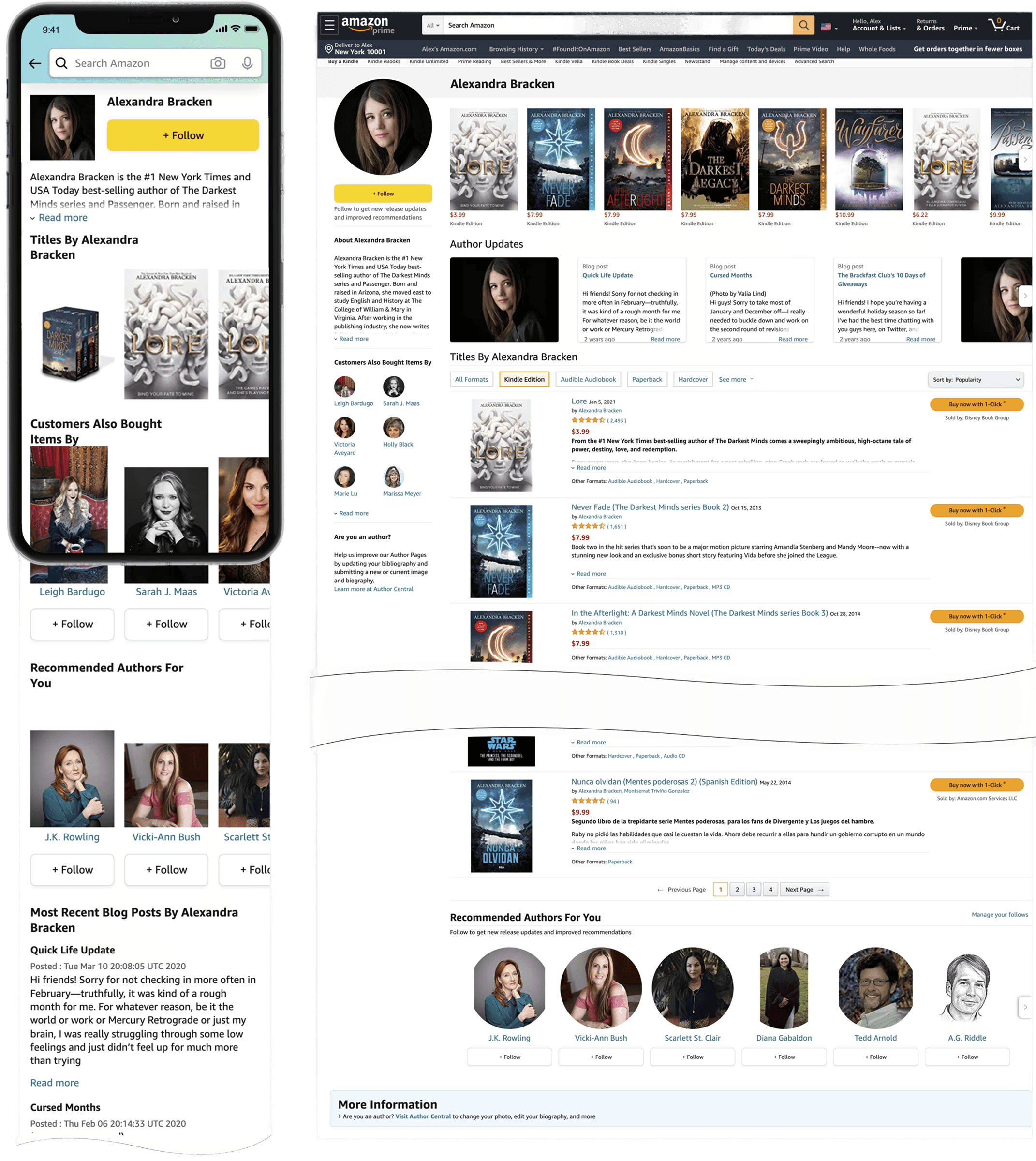
Old Author Page
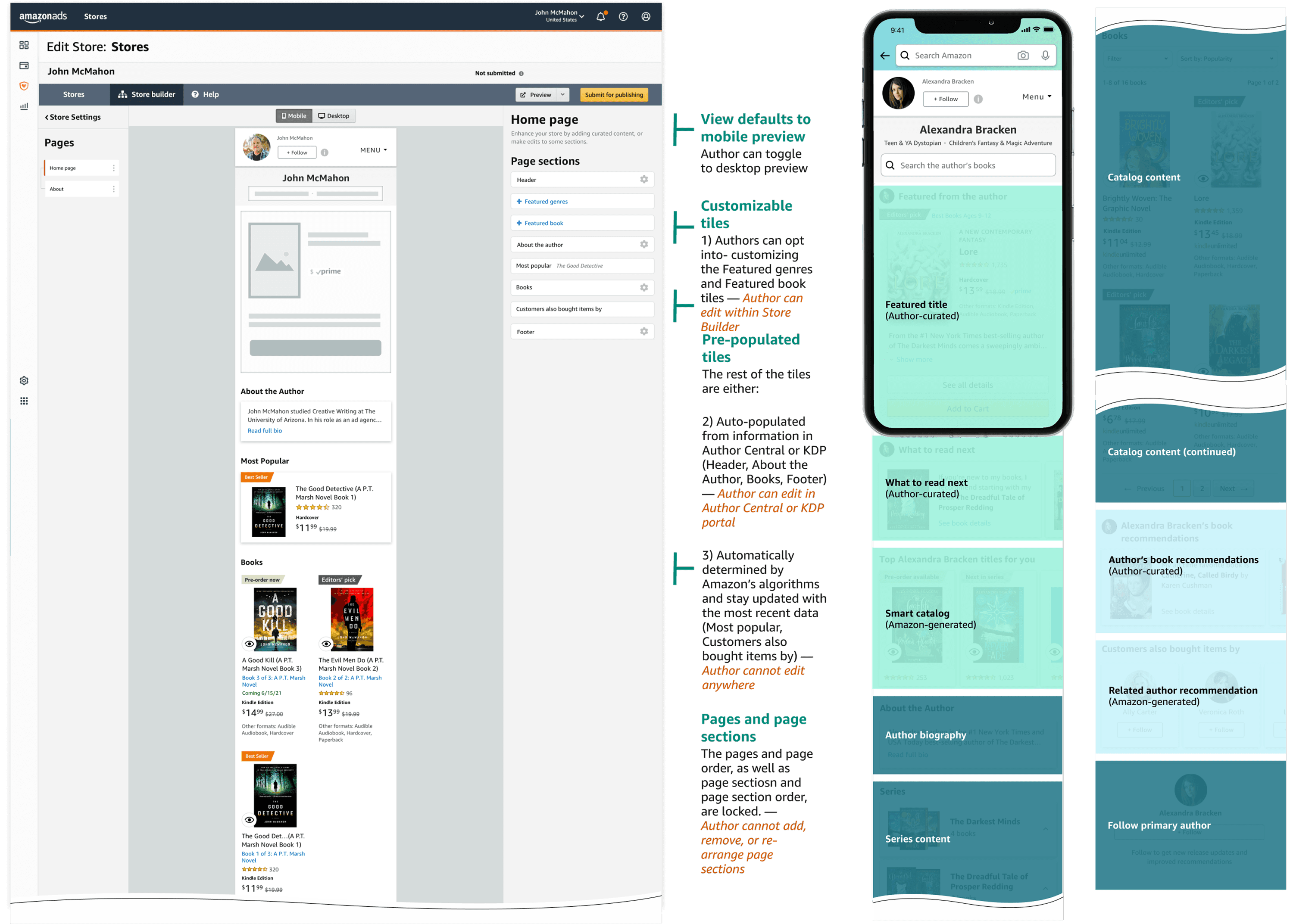
Author Store Builder
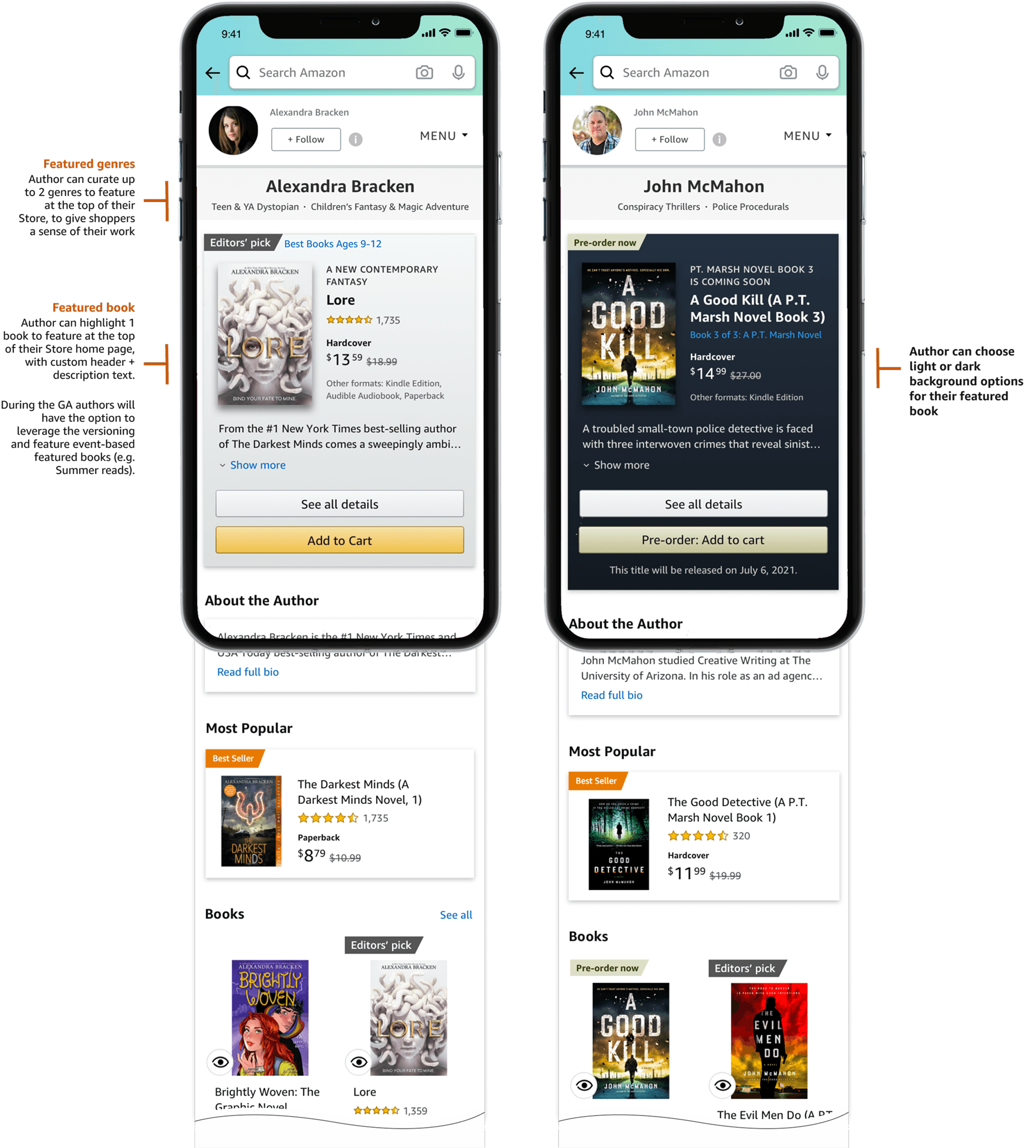
Featured book
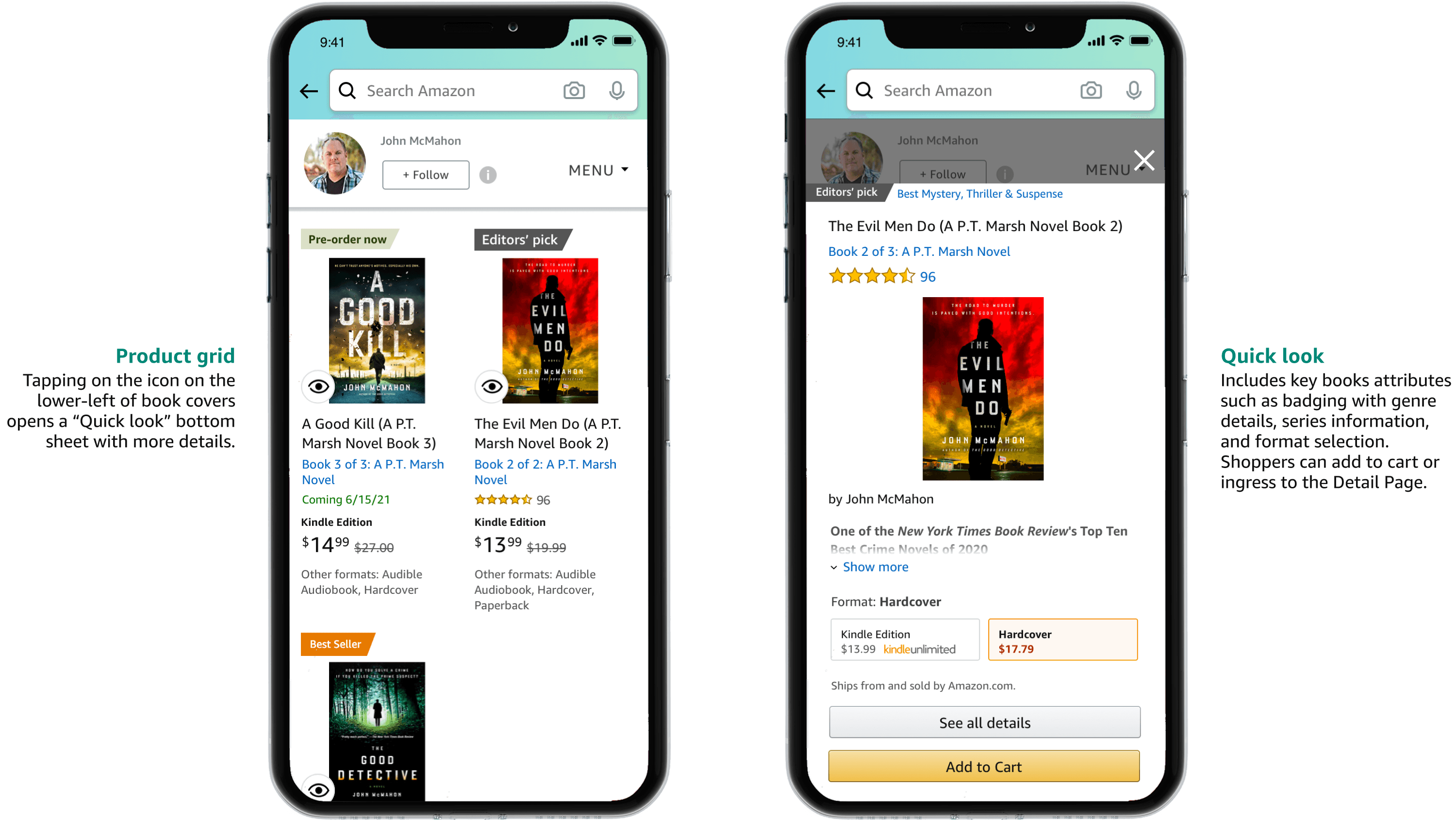
Quick look
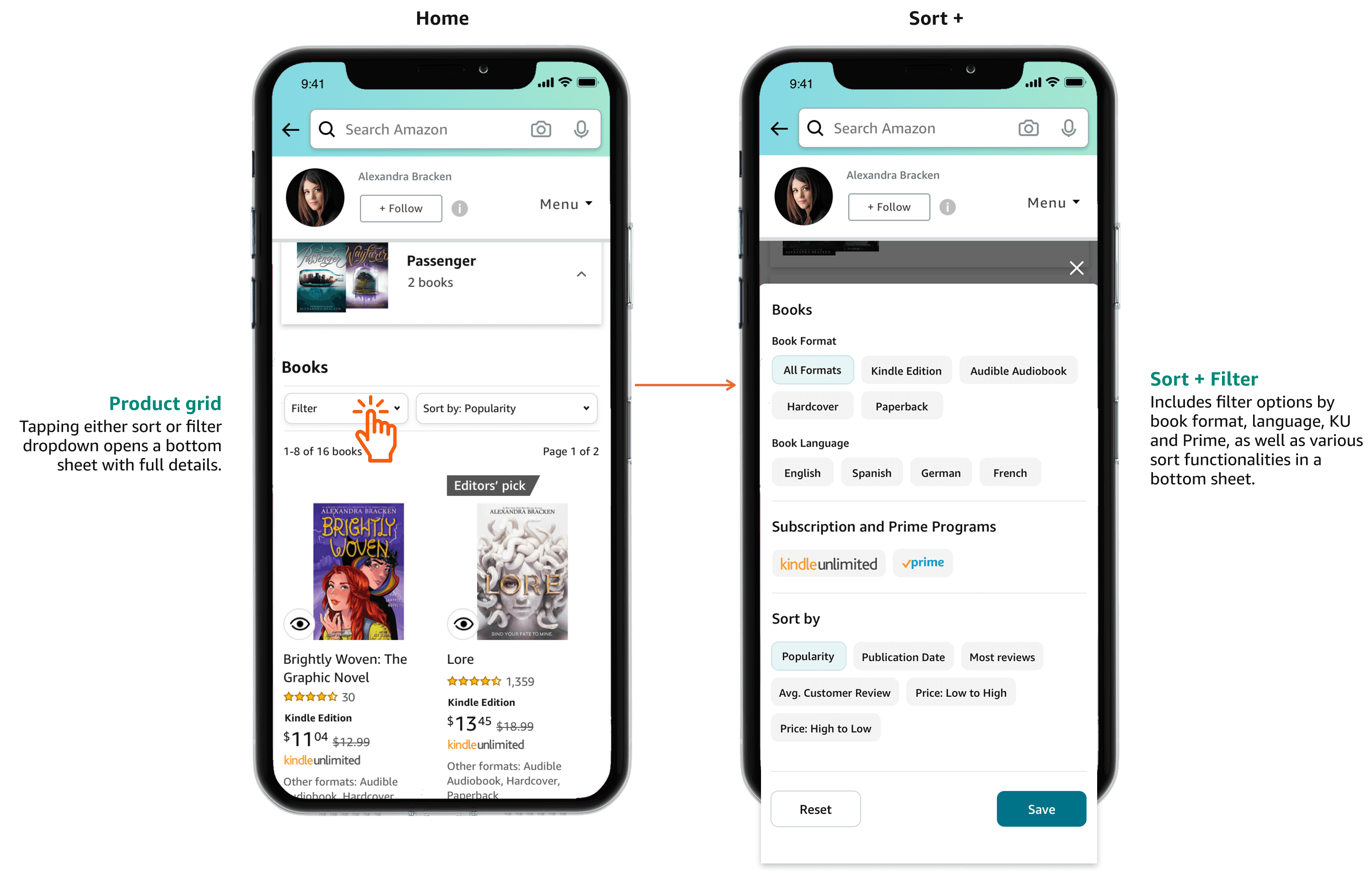
Sort and filter
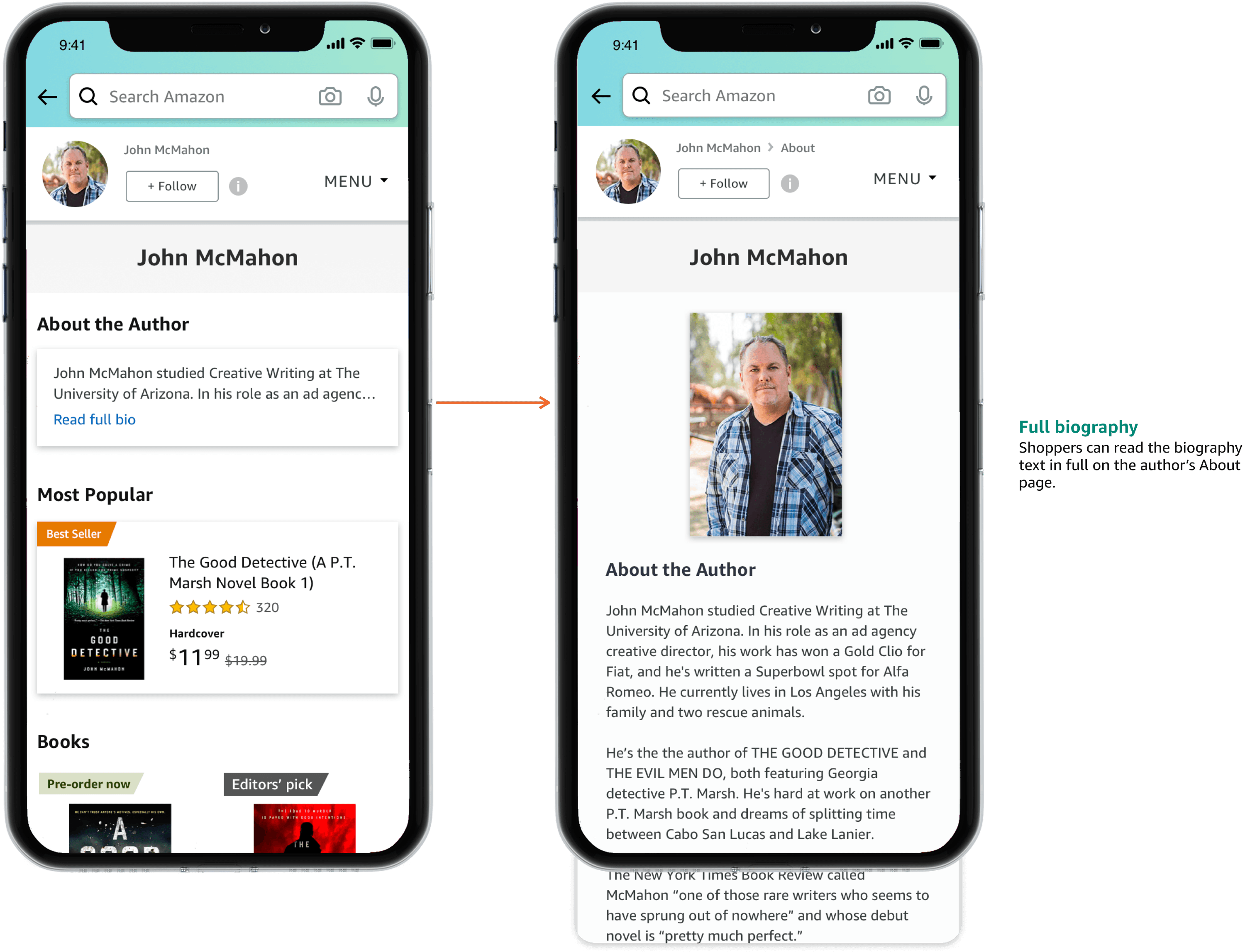
About section
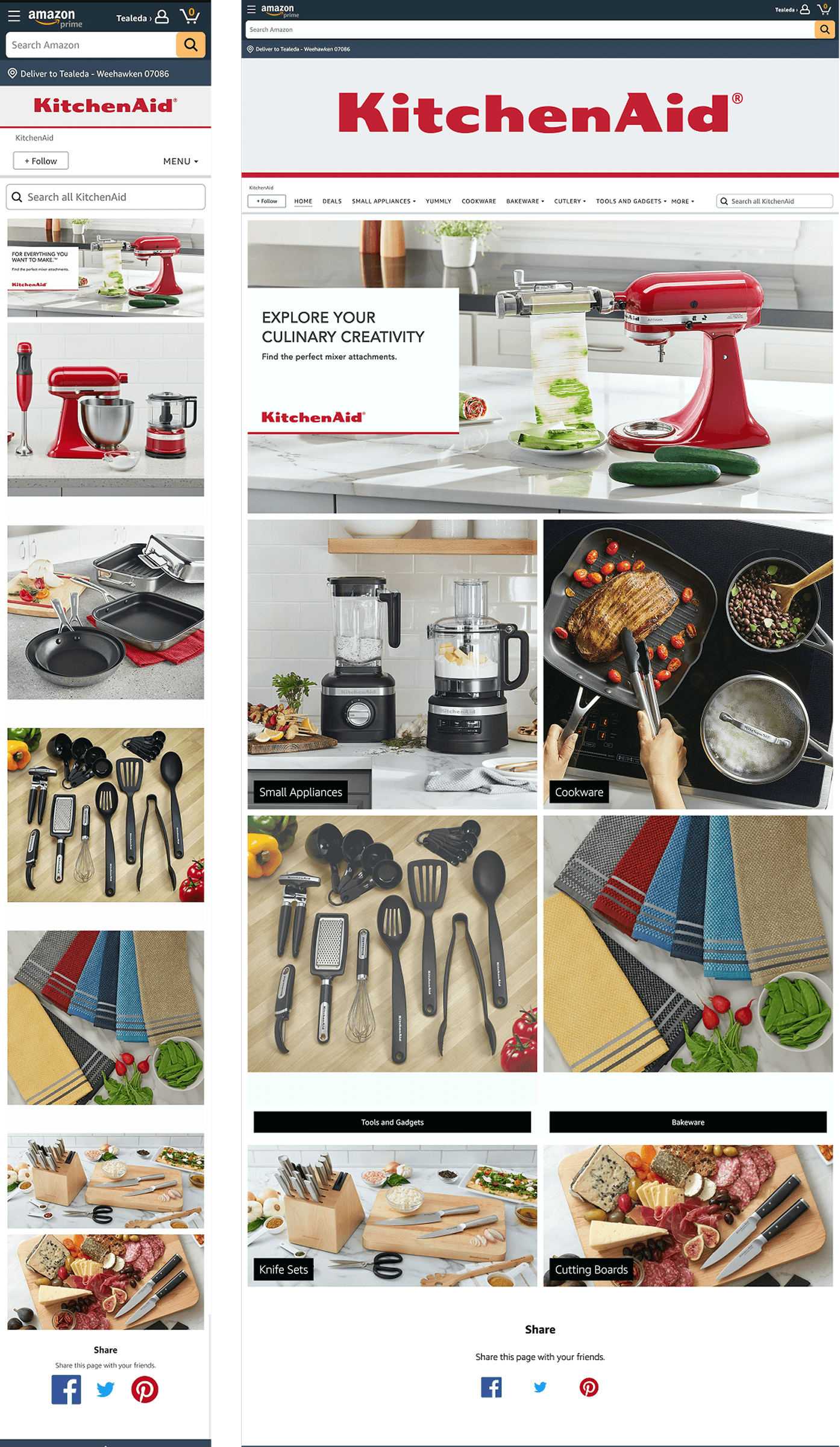
Amazon Brand Store, the foundation Author Stores is built on
Leadership & Organizational Impact
Navigating competing roadmaps This initiative required aligning the Ads and Retail organizations that had different roadmaps, technical investments, and definitions of success. Neither owned the full author journey. Getting both to move in the same direction required sustained alignment work, not just a kickoff meeting.
Making the case for access The $35,000 barrier reflected the high cost of entry into Amazon's advertising ecosystem. Making the case that independent authors was worth the investment required framing the problem in terms that would compel leadership to act while advocating for a group that had no seat at the table.
Sequencing to reduce risk Rather than pursuing a full rebuild of Author Pages, the team recommended leveraging and customizing the Brand Stores infrastructure for author needs. This decision reduced engineering overhead, accelerated the timeline, and avoided the risk of a large-scale migration that could be delayed.
Prioritizing access over perfection The Author Stores launch decoupled the reader-facing experience from the author-facing customization tools. Authors could not yet fully customize their stores at launch. That was a deliberate tradeoff, shipping a validated experience to readers while continuing to build the author tools.